


On this page:
- List of schools
- Facts about primary school education in Poland
- Types of private primary schools
- Benefits of private primary schools
- Choosing a private primary school
Facts about primary school education in Poland
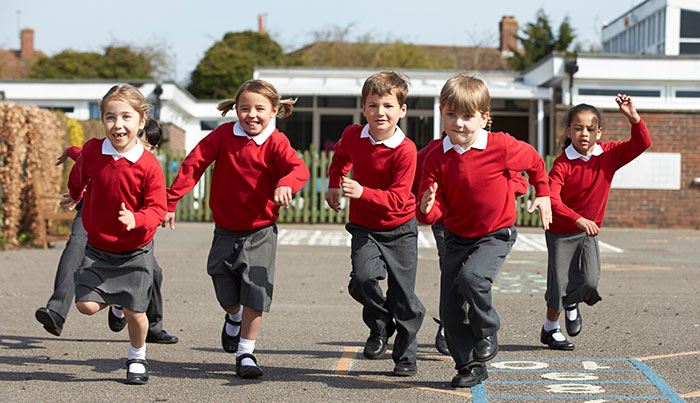
Primary schools (szkoła podstawowa) in Poland tend to have some common traits. Many private and public primary schools have similar guidelines. Below, we describe some of the main ones.
Age range
Children must attend primary school (private and public) from the age of 7 to 13. They normally attend primary school for six years in total.
Curriculum and skills learned
Different primary schools have different learning objectives. Most schools, though, aim for your child to acquire several key skills.
- Literacy: reading, writing, and self-expression
- Math: arithmetic and geometry
- Social skills: cooperation, sensitivity, and problem-solving
- Arts: creativity, aesthetics, and art appreciation
- Morality: understanding of ethics and values
- Civics and community: understanding of oneself as an individual and a member of a family and society
- History and culture: understanding of cultural, historical, national, and ethnic issues
The school day
In most schools, the day starts between 8am and 9am and ends between 2pm and 3pm. Normally, several lessons are given throughout the day. These are around 45 minutes long with with 5 or 10 minute breaks in between. Lunch is usually around 30 minutes
Grade levels
According to Alberta’s Poland International Education Guide, primary education is often divided into two stages. The first stage (I Etap), Grades 1 to 3, is called integrated education. In this stage, teachers create a schedule, with a flexible timetable and breaks, and monitor educational rogress. This stage often involves the planning of as many as 18 lessons per week, including three hours of physical education.
Activities and subjects for stage 1
(based on Alberta’s Poland International Education Guide)
| Activities and subjects | Cumulative hours per week in three years |
|---|---|
| Integrated teaching* | 54 |
| Religion/ethics | 6 |
| Hours at the principal's discretion** | 12 |
| Total | 72 |
* Combines elements of language arts, arithmetic, natural sciences, social skills, and the fine and performing arts.
**Since September 2008, six hours are devoted to foreign language.
The second stage (II Etap) covers Grades 4 to 6. At this stage, teaching is arranged by subjects and provided by individual teachers. In addition to subjects, the curriculum recommends “educational paths” (sciezki edukacyjne), such as reading, media, ecology, and health and social education.
Activities and subjects for stage 2
(based on Alberta’s Poland International Education Guide)
| Subjects | Cumulative hours per week in three years |
|---|---|
| Language arts | 16 |
| History and social studies | 4 |
| The arts (music and/or visual arts) | 4 |
| Modern foreign language | 8 |
| Math | 12 |
| Natural science | 9 |
| General technical subjects | 2 |
| Computer science | 2 |
| Physical education | 12 |
| Lessons with the homeroom teacher | 3 |
| Religion/ethics | 6 |
| Hours at the principal’s discretion | 9 |
| Total | 87 |
Types of private primary schools
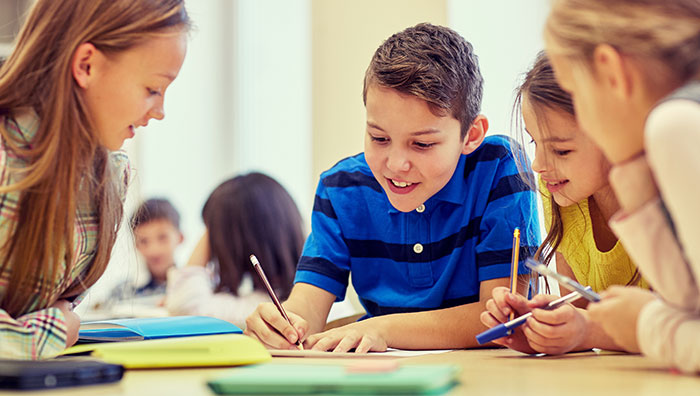
There are many different kinds of private or non-public primary schools in Poland. These schools can differ in terms of teaching philosophy, focus, and more. It’s important to choose a school that’s right for your child.
- Montessori schools: These schools are student-centred with a strong focus on self-directed learning. Montessori teachers connect children with meaningful work that challenges them, but rarely provide lectures.
- Waldorf schools: These schools focus on the whole child. They educate your child’s intellectual, practical, and artistic sides.
- Special needs schools: These include schools with programs for children with learning, developmental, and physical disabilities.
- Gifted schools and programs: These provide enrichment and acceleration programs to students who are well above average in academics.
- Boarding schools: These can be an option for international and English-language students.
- International schools: Most of these offer room and board. They can be a great option for international students from North America, Europe, and other continents.
- Language schools: There are Polish and English primary schools (sometimes called “international preschools”). There are also bilingual, English-Polish primary schools.
Benefits of private primary schools
There are lots of reasons to send your child to a private primary or elementary school in Poland. As we all know, the early years, including the primary years, from 7 to 13, are critical to a child's development.
Of course, private school is a big commitment. It’s a big investment of time, energy and resources. That said, there are lots of advantages to sending your child to a non-public primary school.
- Small classes: Many primary schools (private and non-public), not to mention secondary schools, have small classes and lower teacher-to-student ratios. This can make for a warm, caring, and supportive environment.
- Individualized instruction: Many private primary or elementary schools offer tailored programming for your child. This enables them to address your child’s specific strengths and weaknesses.
- Strong teachers: Private schools tend to have highly skilled teachers with great credentials. The vast majority of teachers are also enthusiastic and dedicated to their work.
- Safety: Private schools have reputations for maintaining high standards for safety, discipline, and respect. Lower staff-to-student ratios allow for more effective observation and control of school grounds.
- Community: Private schools tend to have a strong community feel and environment. They also offer rich networking opportunities in school and in the work world.
- Resources: At private schools, you’ll find incredible resources to support student learning in the classroom, sports field, art studio, and beyond. Quality resources and extracurriculars provide students with the opportunity to fully explore their interests and talents.
- Feeder schools: Many private primary and elementary schools are linked with junior high and high schools. These “feeder schools” ease the potentially difficult transition between schools. They may also help pave the way to gaining admission to a prestigious high school or university in the future.
Choosing a private primary school
Narrowing down a list of private schools may seem overwhelming. But choosing the right school doesn’t have to be a stressful process.
Here are some tips:
- Consider your child’s needs and how certain types of schools might benefit them.
- Research those schools and involve your child in the process.
- Visit school websites.
- Plan to visit the school for a private tour or during their open houses. Bring your child along, if possible, to experience the atmosphere.
- Prepare some questions to ask school officials and current students, as well as the parents of current students.
- Create a shortlist of a few schools your family is interested in applying to and go from there.
Also, consider the following questions:
- How much is tuition? Do you think it offers good value? Are there any hidden costs (e.g., field trips, uniforms, lunches, etc.)?
- How close is it to your home? Are there bus services or public transportation to make the daily trip reasonable?
- What is the school’s average class size? How many students are enrolled there?
People who read this also viewed:
- 6th Private School Expo in Warsaw: Summary, Conclusions, and Key Trends
- Our Kids Interview: Get to know English Montessori School Katowice
- Our Kids Interview: Get to know FSA School
- Our Kids Interview: Get to know Polish British Academy of Warsaw
- Private bilingual elementary schools in Warsaw
- Private primary schools in Warsaw
- Our Kids Interview: Get to know The English Playhouse and The English Primary
- Social primary schools
- Poland education: grade levels
-
Advice Guide
- The admissions process
- what to ask at a private school open day
- Back to school without stress. How to prepare your child emotionally?
- Myths about non-public education. Facts to know before choosing a non-public school
- How to Apply to a Private School in Poland
- School open houses
- About the Cambridge Pathway
- Our Kids Interview: Get to know Cosmopolitan Schools - Wrocław and Kraków (interviews - 2025, 2021, and 2020)
- Our Kids Interview: Get to know The British International School of Wroclaw
- Our Kids interview: Get to know Regent College International Schools
- Third Private School Expo in Warsaw - summary
- Our Kids Interview: Get to know EF Academy Oxford
- Homeschooling
- Boarding schools
- Advantages and disadvantages of studying in an international school
- Private school rankings
-
Grades
- 6th Private School Expo in Warsaw: Summary, Conclusions, and Key Trends
- Our Kids Interview: Get to know English Montessori School Katowice
- Mokotow High School Campus - a new Warsaw high school and Thames British School campus
- Our Kids Interview: Get to know KIDS & Co.
- Choosing a high school in Poland
- Our Kids Interview: Get to know FSA School
- Our Kids Interview: Get to know Polish British Academy of Warsaw
- Private middle schools
- Private bilingual elementary schools in Warsaw
- Private high schools in Warsaw
- Private primary schools in Warsaw
- Preschools in Warsaw
- Our Kids Interview: Get to know The English Playhouse and The English Primary
- Montessori preschools
- Social primary schools
- Montessori nursery schools
-
Locations
- Our Kids Interview: Get to know Sapiens International Innovative Community School
- Our Kids Interview: Get to know Thames British School
- Our Kids Interview: Get to know EF Academy
- Private schools Warsaw
- Our Kids Interview: Get to know The Primary and Secondary Schools of the Sisters of Nazareth in Warsaw
- Our Kids interview: Get to know Excellence in Education better
- Our Kids Interview: Get to know the Canadian School of Warsaw
- Olsztyn schools
- Private schools in Gdańsk & Gdynia
- Private schools in Bialystok
- Private schools in Łódź
- Private special needs schools in Warsaw
- Our Kids Interview: Get to know PRIMUS Non-Public Primary School No. 47 and Non-Public Secondary School
- Private Catholic and Christian schools in Warsaw
- International Baccalaureate (IB) schools in Warsaw
- Private day schools in Warsaw

 POL
POL CAN
CAN