





On this page:
- 1. Fit with the child
- 2. Program and its real structure
- 3. Staff and safety
- 4. Group size
- 5. Communication with parents
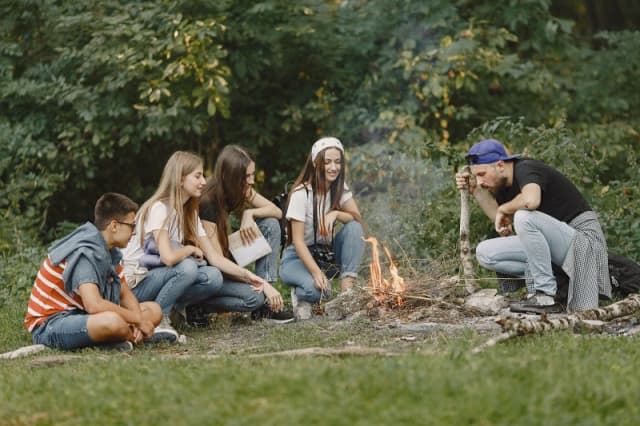
It is worth looking not only at the offer of summer camps and extracurricular activities, but above all at how well they match the child’s needs. Our guide helps parents find additional activities and extracurricular programs for children and teenagers.
What are the main types of summer camps?
Non-public schools offer a wide range of extracurricular activities, either integrated into the daily curriculum or held outside regular lessons. Parents want their children to spend their free time in an engaging way, learning new skills while also relaxing. That is why many families choose to send their children to camps during the holiday period.
Below are the most important and popular types of holiday programs.
Day camps
Day camps are a form of daytime activities where children spend time in a peer group but return home in the evening.
Key features of day camps:
- most often designed for younger children
- shorter activity blocks
- an introduction to organized holiday programs
Day camps work well as a “first step” toward more independent travel experiences.
Overnight camps
These are traditional camps where children stay away from home, often for several days or weeks. They are usually organized in mountains, by the sea, or near lakes—places that provide close contact with nature. Increasingly, non-public schools also organize trips to other cities or even abroad. This allows children and teenagers to discover new places and different cultures.
Key features of overnight camps:
- greater independence (better suited for older children and teenagers)
- more intensive activity programs
- building peer relationships
- learning to function without constant parental presence
This is an experience that often has a strong impact on a child’s social and emotional development. It is advisable for a child to attend day camps before participating in an overnight camp. This gradual exposure to time spent away from home helps build social skills, independence, and confidence.
Language programs and courses
Intensive language programs are also very popular. They usually take the form of trips abroad and are mainly aimed at older children, teenagers, and students.
Such programs enable fast and effective language learning through deep immersion—the learning process happens through everyday exposure to the language and culture of the country. This not only accelerates language acquisition and understanding of nuances but also provides insight into a different culture.
Individual and small-group activities
In addition to day camps and overnight camps, non-public schools often offer more individualized forms of activities.
The most popular include:
- Individual recreational and developmental activities – 1:1 learning or training with an instructor, e.g. swimming, tennis, music, visual arts, or foreign languages. These are ideal for children who need a calmer pace and full personalization of learning.
- Semi-individual activities (small groups) – small groups of a few participants that combine individual attention with early teamwork experience, e.g. mini language camps, STEM workshops, or small artistic programs.
- Flexible day activities – short, modular activities that can be booked selectively, e.g. museum workshops, science center activities, creative or sports classes held in a drop-in system.
- Hybrid home-based holidays with individual activities – a model combining staying at home with selected weekly activities, such as individual training sessions, language lessons, or thematic meetings, offering high scheduling flexibility.
How to choose a good summer camp?
The offer of camps is very broad and, following the principle that not every form of holiday suits every child, it is worth paying attention to several key factors.
1. Fit with the child
Not every camp is suitable for every child. Consider:
- age and level of independence
- temperament (calm vs. highly active child)
- previous travel experience.
2. Program and its real structure
It is important to check not only the theme of the camp, but also how much time is devoted to activities, whether there is space for rest, and whether the program is varied. Review the exact schedule and consider whether the child or teenager will cope with the structure. Activities should be engaging but not overly rigid. Summer programs should support discipline and social skills while still allowing time for rest.
3. Staff and safety
Key questions include: who leads the activities? What experience do they have? What does childcare supervision look like in practice? People create the environment and atmosphere, so it is important to know who will be responsible for the children.
4. Group size
More does not always mean better. Smaller groups often provide:
- greater attention from supervisors
- better individual support
- easier adaptation
This is especially important for children with more sensitive needs (e.g. neurodivergent or highly sensitive children), who may find large groups challenging.
5. Communication with parents
Communication is essential. A well-organized camp provides updates on the program, contact in case of difficulties, and a sense of safety for both children and parents.
What does a child gain from a camp?
A well-chosen camp is not just a way to spend the holidays. For children, it is a valuable developmental experience. Camps and holiday programs offer many benefits:
- support the development of interests and spark new ones
- break routine through a new environment
- allow children to gain new knowledge and skills
- lead to new and often lasting friendships and memories
- provide mental and physical stimulation
- strengthen independence and responsibility
- build self-esteem through achieved successes
- inspire creativity
- build overall resilience
- encourage active leisure and curiosity about the world
This form of spending time is a great opportunity to build important future skills.
Summary
Choosing a summer camp is a decision that should take into account both the child’s needs and their readiness for new experiences. A well-matched summer camp can become one of the most important holiday memories and a step toward greater independence.
For parents, it is often the only moment of rest during the year. It is therefore worth ensuring that this rest is peaceful. Holiday programs organized by private and non-public schools provide peace of mind for both parents and children. Because nothing tastes better than a morning coffee in silence, knowing that our children are in safe hands.
We invite you to explore summer activity offers and see what non-public schools provide during the holidays.
Cover image by Magnific: https://www.magnific.com
People who read this also viewed:
- Warsaw private schools
- Kraków private schools
- Poznań private schools
- Wrocław private schools
- Łódź private schools
- Rzeszów private schools
- Gdańsk & Gdynia private schools
-
Advice Guide
- The admissions process
- what to ask at a private school open day
- Back to school without stress. How to prepare your child emotionally?
- Myths about non-public education. Facts to know before choosing a non-public school
- How to Apply to a Private School in Poland
- School open houses
- About the Cambridge Pathway
- Our Kids Interview: Get to know Cosmopolitan Schools - Wrocław and Kraków (interviews - 2025, 2021, and 2020)
- Our Kids Interview: Get to know The British International School of Wroclaw
- Our Kids interview: Get to know Regent College International Schools
- Third Private School Expo in Warsaw - summary
- Our Kids Interview: Get to know EF Academy Oxford
- Homeschooling
- Boarding schools
- Advantages and disadvantages of studying in an international school
- Private school rankings
-
Grades
- 6th Private School Expo in Warsaw: Summary, Conclusions, and Key Trends
- Our Kids Interview: Get to know English Montessori School Katowice
- Mokotow High School Campus - a new Warsaw high school and Thames British School campus
- Our Kids Interview: Get to know KIDS & Co.
- Choosing a high school in Poland
- Our Kids Interview: Get to know FSA School
- Our Kids Interview: Get to know Polish British Academy of Warsaw
- Private middle schools
- Private bilingual elementary schools in Warsaw
- Private high schools in Warsaw
- Private primary schools in Warsaw
- Preschools in Warsaw
- Our Kids Interview: Get to know The English Playhouse and The English Primary
- Montessori preschools
- Social primary schools
- Montessori nursery schools
-
Locations
- Our Kids Interview: Get to know Sapiens International Innovative Community School
- Our Kids Interview: Get to know Thames British School
- Our Kids Interview: Get to know EF Academy
- Private schools Warsaw
- Our Kids Interview: Get to know The Primary and Secondary Schools of the Sisters of Nazareth in Warsaw
- Our Kids interview: Get to know Excellence in Education better
- Our Kids Interview: Get to know the Canadian School of Warsaw
- Olsztyn schools
- Private schools in Gdańsk & Gdynia
- Private schools in Bialystok
- Private schools in Łódź
- Private special needs schools in Warsaw
- Our Kids Interview: Get to know PRIMUS Non-Public Primary School No. 47 and Non-Public Secondary School
- Private Catholic and Christian schools in Warsaw
- International Baccalaureate (IB) schools in Warsaw
- Private day schools in Warsaw


 POL
POL CAN
CAN