


On this page:
- Step 1. Set your priorities
- Step 2. Research private and independent schools online
- Step 3. Visit the school at an open house
- Step 4. Submit your documents and application
- Step 5. The admissions interview
- Step 6. The school’s decision, the enrolment fee and signing the contract
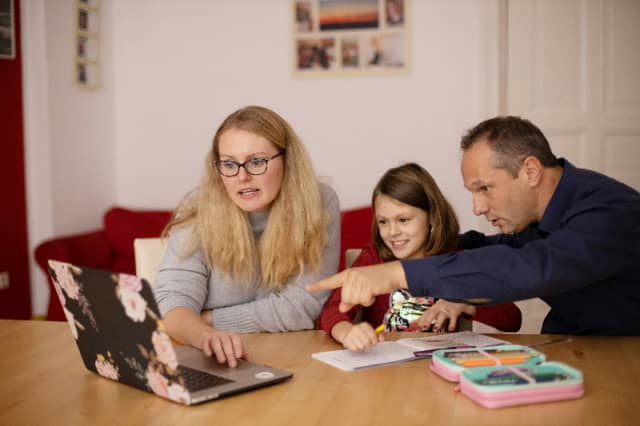
See how to prepare well for admissions and what the whole process looks like.
When does admissions open at a private or independent school?
There is no single, universal admissions date at non-public schools. Some schools and preschools open applications for the next school year as early as the autumn before; others don’t start until spring. Some admit students on a rolling basis all year round, which can be a real lifesaver for families whose children need to switch schools mid-year.
For private high schools (liceum, grades 9-12), the main benchmark is often the eighth-grade exam (egzamin ósmoklasisty, the standardized exam taken at the end of elementary school in Poland). Some schools wait for the results; others run admissions independently, using their own procedures.
Rather than watching a single date on the calendar, it’s smarter to take the initiative:
- Follow the news from the schools you’re interested in. On Our Kids you’ll find current events and open house dates for private and independent schools.
- Ask the school directly (by phone, by email or at the front office) when applications open for the coming school year.
- Don’t put off first contact. Even if formal admissions haven’t started yet, you can sign up for an open house or an introductory meeting.
Official data from Statistics Poland (GUS) show that non-public education keeps growing in popularity. In the 2024/2025 school year, public schools made up 88.4% of all elementary schools in Poland, which means nearly one in nine elementary schools is now non-public. Among general high schools (licea ogólnokształcące) the share is even higher: public schools account for 70.8%, so almost one in three is non-public. In other words, competition for places at the most sought-after schools is growing, and the decision to choose a private school is best not left for later.
Private and independent school admissions, step by step
Step 1. Set your priorities
Choosing a school is often a decision the whole family takes part in. So before you start browsing school listings, sit down together and decide what matters most to you. The table below will help you organize your criteria:
Criteria for choosing a private or independent school |
Why it matters |
Location and commute |
The daily commute affects your child’s mood and how the whole family’s day runs. |
Curriculum |
Every school follows the Polish national curriculum (set by the Ministry of Education). What differs is what’s built on top of it: bilingual, international (IB, British, American), school-designed or pedagogy-based (e.g., Montessori, Waldorf). That shapes both the pace and the teaching method. |
Class size |
Smaller groups usually mean more individual attention, but how much attention your child actually gets also depends on the teacher’s methods and on how many students with special educational needs are in the class. |
Educational approach |
Schools differ in how they work with children: how much independence they encourage, how they assess, and whether the emphasis is on competition or on each child’s own pace of development. |
Extracurriculars |
Sports, arts, languages. Check whether they match your child’s interests, and whether they’re included in after-school care or need extra organizing and extra fees. |
Student support services |
Access to a speech-language pathologist, school psychologist or school counsellor matters not only for children with a formal special-needs assessment. Find out how the school supports students day to day. |
Total cost |
Tuition isn’t the only expense. Add the enrolment fee, textbooks, trips and other extras. |
Step 2. Research private and independent schools online
It’s worth reading up on schools and preschools online: their websites, profiles, reviews from parents and students, and any available rankings. If you’re searching in a specific city, take a look at our school roundups for Warsaw, Kraków, Poznań, Wrocław, Gdańsk and other cities. Compare several schools against the same criteria from the table above rather than judging each one in isolation.
And if you’d like to meet all the schools in one place, come to the annual Our Kids Expo, the Private Schools Expo in Warsaw, where you can meet the schools in person, all in one day and one place.
Step 3. Visit the school at an open house
A school visit is where you learn the most about everyday life there. We recommend preparing your questions in advance. Check out our ready-made guide: 10 Questions to Ask a Private School →
Step 4. Submit your documents and application
Every school has its own requirements for documents, deadlines and application fees. You’ll find the full list of documents (though it often depends on the school), plus information on waitlists and what to do if you miss a deadline, here: The Private School Application Process, Step by Step →
Step 5. The admissions interview
At many schools, especially at the elementary and high school levels, the next step is a conversation with your child, and sometimes with the parents too. What it looks like depends heavily on your child’s age and on the school’s profile. Preparing for an admissions interview at a private or independent school is important, but it’s just as important to simply be yourself and show both your strengths and your challenges. That helps the school, and you, judge whether your child will thrive there.
We’ve covered this in detail, with sample questions: how to prepare your child for the admissions interview →
Step 6. The school’s decision, the enrolment fee and signing the contract
Once the school gives you a positive decision, it’s time for the paperwork. When you enrol your child at a non-public school, you also sign an enrolment contract (umowa o kształcenie) with the school, and as a consumer you have specific rights under it .
What should you watch for when choosing a private or independent school, so you don’t end up with regrets?
- Don’t rely on school rankings alone. A ranking shows a handful of selected, usually numerical criteria. It can’t tell you whether a given school will be the right environment for your child.
- Don’t go to the admissions interview without preparing your child. A short, calm chat at home about what to expect will help your child feel more confident at the meeting.
- Don’t compare tuition alone. Enrolment fees, textbooks, trips and extracurriculars can change the total cost of a school year significantly. Ask the school about every cost you can expect over the full year.
- Don’t leave your contract questions for last. It’s much better to know the notice period and the rules on tuition increases before you sign, not after.
“Good education isn’t about positions in the rankings. Non-public schools tend to focus on other things, seeing success as drawing out the potential in every student. (…) In non-public schools, the work is adapted more closely to each student’s needs, instead of forcing everyone into a rat race, often at the expense of their mental health.”
— Jakub Lorenc, teacher at Monnet International School
FAQ: Common questions about private and independent school admissions
How long does the admissions process take?
It depends on the school. It can be as short as a few weeks with rolling admissions, or several months at schools with a multi-stage process (open house, documents, interview, decision).
Will every child get into a private school?
There’s no guarantee, for a number of reasons. Popular schools and classes with a limited number of spots may select students based on an interview, academic results or the order in which applications arrive. And sometimes a particular school simply isn’t the right fit for your child. Why? Because every school is different, and so is every child, with different abilities and talents, different challenges and different special educational needs.
It’s worth aiming for the school where your child will feel good and develop their skills, rather than one where they’ll be scrambling to keep up with other students at the expense of their own well-being.
Some schools also apply additional priority criteria, for example for siblings of current students, children of school staff or children of the school’s founders.
How much is the enrolment fee?
As an example, it may range from PLN 1,000 to PLN 3,000, or the equivalent of one to three months of tuition. The exact amount depends on the school, so ask about it directly when you submit your documents. What’s more, depending on the school’s price tier and reputation, these amounts can be considerably higher.
Is the enrolment fee refundable?
Usually not. It’s a non-refundable fee that reserves your child’s spot. Always check the refund terms in the contract with the specific school.
What should an enrolment contract include?
First and foremost: the amount and due dates for tuition and the enrolment fee, the rules for any tuition increase during the year, the notice period, the refund terms if you withdraw, and the exact scope of services covered by tuition (for example, whether it includes meals, extracurriculars or trips).
What is the notice period for ending a contract?
Most often a few months, but the exact length is always set by the contract with the specific school. It’s one of the points that deserves extra attention before you sign.
What if my child doesn’t pass the entrance exam or the interview doesn’t go well?
Many schools run late admissions or offer a retake date. Ask about it directly at the front office.
Find out what to do if your child didn’t get into their chosen high school →
Do I have to apply to only one school?
No. Most families apply to several schools at once, to improve their chances and to be able to compare offers once the decisions come in.
Sources:
- Statistics Poland (GUS), Polish Schools in Numbers: What Education Looked Like in the 2024/2025 School Year (in Polish)
- An Enrolment Contract with a Non-Public School: What Rights Does a Consumer Have?, poradnikprzedsiebiorcy.pl (in Polish)
- Photo by sofatutor on Unsplash
People who read this also viewed:
- what to ask at a private school open day
- School open houses
- The application process
- Private school interviews
- Poland school profiles
-
Advice Guide
- The admissions process
- what to ask at a private school open day
- Back to school without stress. How to prepare your child emotionally?
- Myths about non-public education. Facts to know before choosing a non-public school
- How to Apply to a Private School in Poland
- School open houses
- About the Cambridge Pathway
- Our Kids Interview: Get to know Cosmopolitan Schools - Wrocław and Kraków (interviews - 2025, 2021, and 2020)
- Our Kids Interview: Get to know The British International School of Wroclaw
- Our Kids interview: Get to know Regent College International Schools
- Third Private School Expo in Warsaw - summary
- Our Kids Interview: Get to know EF Academy Oxford
- Homeschooling
- Boarding schools
- Advantages and disadvantages of studying in an international school
- Private school rankings
-
Grades
- 6th Private School Expo in Warsaw: Summary, Conclusions, and Key Trends
- Our Kids Interview: Get to know English Montessori School Katowice
- Mokotow High School Campus - a new Warsaw high school and Thames British School campus
- Our Kids Interview: Get to know KIDS & Co.
- Choosing a high school in Poland
- Our Kids Interview: Get to know FSA School
- Our Kids Interview: Get to know Polish British Academy of Warsaw
- Private middle schools
- Private bilingual elementary schools in Warsaw
- Private high schools in Warsaw
- Private primary schools in Warsaw
- Preschools in Warsaw
- Our Kids Interview: Get to know The English Playhouse and The English Primary
- Montessori preschools
- Social primary schools
- Montessori nursery schools
-
Locations
- Our Kids Interview: Get to know Sapiens International Innovative Community School
- Our Kids Interview: Get to know Thames British School
- Our Kids Interview: Get to know EF Academy
- Private schools Warsaw
- Our Kids Interview: Get to know The Primary and Secondary Schools of the Sisters of Nazareth in Warsaw
- Our Kids interview: Get to know Excellence in Education better
- Our Kids Interview: Get to know the Canadian School of Warsaw
- Olsztyn schools
- Private schools in Gdańsk & Gdynia
- Private schools in Bialystok
- Private schools in Łódź
- Private special needs schools in Warsaw
- Our Kids Interview: Get to know PRIMUS Non-Public Primary School No. 47 and Non-Public Secondary School
- Private Catholic and Christian schools in Warsaw
- International Baccalaureate (IB) schools in Warsaw
- Private day schools in Warsaw


 POL
 CAN