

The 2026 OUR KIDS Private School Expo is coming to cities near you. Get your family pass



Armbrae Academy KEY INSIGHTS
Each school is different. Armbrae Academy's Feature Review excerpts disclose its unique character. Based on discussions with the school's alumni, parents, students, and administrators, they reveal the school’s distinctive culture, community, and identity.
What we know
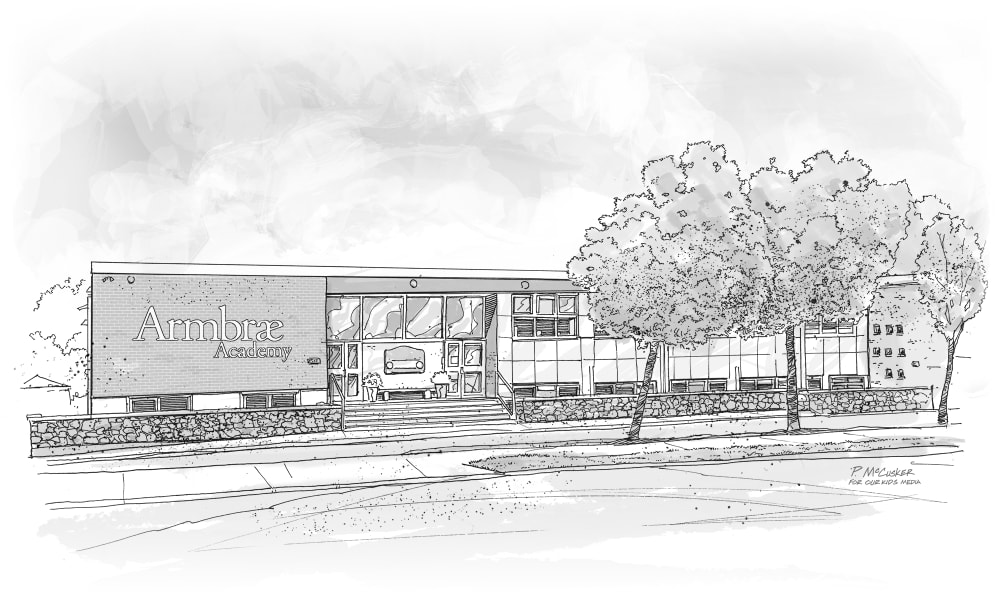
- Armbrae Academy’s optimal size maintains a close-knit community while being able to offer diverse academic, extracurricular, and leadership opportunities, with AP courses, CAS programs, and competitive sports.
- The school’s leadership has thoughtfully expanded its campuses, enriched community diversity, and introduced initiatives that reflect a commitment to growth and inclusion.
- With integrated tech, personalized guidance, and a play-based early program, Armbrae supports individual growth from Preschool through Grade 12.
Our editor speaks about the school
Handpicked excerpts
Armbrae Academy is a co-educational, private school nestled in Halifax’s South End. It is comprised of Preschool and Pre-Primary (ages 3 and 4), Lower School (Primary to Grade 5), Middle School (Grades 6 to 8) and Upper School (Grades 9 to 12). Each level has its own staff heads, along with a school-wide prefect system, which sees students sorted into different houses.
Despite having only around 350 students, Armbrae provides a well-rounded education supplemented with numerous extracurricular, classroom, and community experiences. “I like to think we’re a small school with big opportunities. We don't just focus on sports, we don't just focus on academics, we don't just focus on the arts,” says Deputy Head of School Ally Reed. “It's complicated to have so many areas that we provide programming in, but I think it's what sets us apart. And I think that it also speaks to the nature of people; we are not one-dimensional.”
With its small stature, everyone, from parents to staff and students, knows each other. This allows for a more integrated style of learning, which allows for a better support system. “It’s like this magical, little, warm community where everybody knows each other; it has maintained this small feeling, even though now we're spread across three campuses. You will see a Grade 12 student who knows the kid in Primary by name,” says Director of Student Success, Alumni and Parent Megan Sernyk. “It’s just this sense of belonging. You can kind of get lost in a big school. You cannot do that here.”
“We’re maintaining a culture where we're part of a family. We belong together, and this is our school,” says Head of School Steve Clarke.
HISTORY
While its facilities are modern, Armbrae is deeply rooted in the fabric of Halifax. Originally known as the Halifax Ladies College, Armbrae opened in 1887 as a finishing and university preparatory school. After a couple of moves, in 1940, it came to Oxford Street. Originally, this building was a large house called Armbrae. It was torn down in 1963 and replaced with what is now the Oxford Campus.
In 1979, the school became co-ed and officially changed its name to Armbrae Academy in 1980. In 2008, the school opened a new multipurpose addition to the Oxford Campus, and with enrollment increasing, Armbrae has grown even more. In 2020, they opened their Coburg Campus, and in 2025, they opened their South Campus. Both are less than a five-minute walk from Oxford.
SCHOOL LEADERSHIP
Stephen Clarke joined Armbrae as Head of School in 2019 from Ridley College in Ontario. Along with time at other institutions, he spent over 20 years at Ridley, finishing his tenure there as Deputy Headmaster and Head of Lower School. During his time there, he spearheaded many initiatives, including launching the IB program and expanding the school from Grades 5 to 12 to Junior Kindergarten to 12.
A parent of two current students and one future student says, “Steve’s leadership approach was crucial in our decision to send our kids to Armbrae. As two entrepreneurs, we understand the value of leading with intention and kindness. Steve’s personal and professional values are very much in line with our parenting. We want our kids to be helpful and kind when they are out in the world. We want them to approach others with empathy and also be confident in their decision-making.”
Part of Clarke’s initiative is to ensure Armbrae is more reflective of the larger community, both in staff and students. Traditionally, Armbrae has fallen under the stereotype of being an upper-class, “homogenized” school. “There is no one type of Armbrae student,” says Clarke, who has ensured that Armbrae can attract and retain students and staff from a variety of communities and experiences.
Clarke has overseen several other initiatives, like the campus expansion and the addition of the school’s first mascot: the Osprey.
“If you're going to stay up with this ever-changing world, you've got to be anticipatory,” says Michael Maki, Head of Guidance and University Counselling and Career Education. “And what I have appreciated about Armbrae is that they were sort of ahead of that curve. They weren't being reactive; they were being proactive. For me, elements like that are hallmarks of a school that is doing it right.”
ACADEMICS
At the Pre-Primary and Preschool level (Foundation Years), school is play-based, allowing students to learn through activities like Jolly Phonics, math connections in science and art, and outdoor play. These students also often visit the Primary class.
“Preschool is unique in that they're included and integrated into the school,” says Primary Teacher and the Director of the Foundation Years Programme, Rebecca Cornick. “They're always getting the exposure, the curriculum and the classroom, so when they do come to Primary, it’s just a smooth transition.” Armbrae is the only school in Halifax that offers a Preschool program for three-year-olds.
In Lower School, students start following the Nova Scotia curriculum, with 80-minute periods like math, science and language arts, as well as specialist classes (that can be broken up into 40-minute slots) like music, art, and library. Middle and Upper school continue without the specialist split, with each level designed to prepare students for their next step. Outside of this, Armbrae offers several AP courses, allowing Upper School students to work toward university credits.
Learning outside the basic curriculum extends beyond the classroom. On any given day, students can be on field trips to expand their understanding of a certain science, history or arts topic or collaborate with another grade.
“Because of our small class sizes, the kids are so eager to learn, and the teachers are so eager to dig deep into these topics, that we're just able to expand and go a little bit further and deeper into all of that,” says Director of Lower School Tara Burt. “We give them a lot of opportunities to do hands-on experiments, hands-on activities in math and science, and we also take advantage of a lot of the community around us. I know the older grades are visiting Dalhousie University and St. Mary’s University. We're walking to museums; the Lower School kids are learning about habitats, and they're walking down to the beach at the end of the street. So, they are just really taking advantage of what's around us and just trying to broaden that educational experience.”
TECHNOLOGY
Making sure education is accessible is an important pillar of Armbrae. During COVID-19, they used Brightspace, which they have continued, so parents and students can see what they are working on and any homework that was assigned. “We wanted to have something that was transferable to university, so the kids would be very accustomed to this learning management tool,” says Admissions and Marketing Director Suzanne Morrison.
Since Brightspace is already integrated into everyday learning, Armbrae is using it to enhance its course offerings with Armbrae Everywhere. Select courses can be added to the Brightspace platform and can be done entirely online. “It’s the asynchronous model, where the work is all online, and then they work through it, and then they have a teacher giving them feedback,” says Reed.
Armbrae has a 1:1 computing policy, allowing students to access laptops and tablets for class and note-taking purposes. Students from Primary to Grade 4 have school-owned iPads and Chromebooks, while students in Grades 5 and above are required to bring their own devices.
CAREER AND UNIVERSITY GUIDANCE
At the helm of student success after Armbrae is Head of Guidance and University Counselling and Career Education, Grades 11 and 12 teacher, Michael Maki. Maki takes a one-on-one approach with students to ensure they are prepared for this next step, which is a key part of it being a small school.
“There's so much support,” says a Grade 12 student. “He's been introducing us to books with questions, and he's been kind of going through it all with us, like our packing lists and what we need to take and even the little things that don't come across, like roommates and some of the changes you'll have to make. He's so available; he’ll stay after school for you. I can’t thank him enough for everything.”
Armbrae also takes students on university trips, both in Halifax and to other provinces and holds career and university fairs as well as other opportunities for job shadowing. And, if university isn’t a student’s goal, Maki ensures they still have the same support.
“I meet the students where they're at,” says Maki. “The hashtag that I always use with the students is my job is to help you with (hashtag) life after Armbrae. I don't say college. I don't say university. As a private school, the primary goal is to be a university prep school; that is the primary output, but that does not mean if a student doesn't have that as an ambition, that I'm no less able to assist or promote or provide them opportunities.”
ARTS AND ATHLETICS
Despite being smaller, Armbrae is dedicated to showing students what they can do in sports and arts. While the school can’t have teams that require a larger roster, they offer as many opportunities as possible. Sports include basketball, field hockey, volleyball, track and field, and rowing. Recently, their boys’ senior basketball team were the CAIS National Champions, City Regional Champions and Provincial Champions. Expanding competition beyond Halifax is important to the school.
“We always want to challenge our students and help them strive for excellence in both academics and sports,” says Recreation Director and Social Studies Teacher Ben Ur. “This is a really wonderful way of doing that and exposing them to different parts of the country as well, and especially for the older kids, having university coaches see them.”
Along with these standard clubs and sports opportunities, a core part of Armbrae is CAS, short for Creativity, Action and Service. This school-wide requirement gives students a chance to try out different activities from six categories: academic, arts and society, athletics, leadership, recreational and service. Depending on their grade level, students need to complete a certain number of these by the end of the year. “Sometimes you don't have the motivation to go out and pursue a bunch of different things, and so actually having that system in place gets people doing more things,” says a Grade 11 student.
These activities are divided by their time commitment, with the smaller ones (Mini Activities) mostly being in-school and covering a period of eight to nine weeks. Major Activities and Minor Activities can require more of a time commitment. Activities can include Band, Chemistry Club, Debate Club, Board Game Club, First Aid, Peer Tutors, Chess Club, Yearbook, and Run Club.