
The 2026 OUR KIDS Private School Expo is coming to cities near you. Get your family pass


The Rosedale Day School THE OUR KIDS REVIEW
Verified Review
OUR KIDS verifies every review by confirming the reviewer’s identity and their firsthand experience with the school. Learn more
The 50-page review of The Rosedale Day School, published as a book (in print and online), is part of our series of in-depth accounts of Canada's leading private schools. Insights were garnered by OUR KIDS editor visiting the school and interviewing students, parents, faculty and administrators.

Introduction
The Rosedale Day School is a caring community that offers personalized education in the heart of downtown Toronto.
It’s a hidden gem only in the sense that many city dwellers walk by its exterior without knowing there’s an educational institution inside the retail and office building on Bloor Street. For those in the know, which is a growing number given RDS’s excellent reputation, it’s a place where students from Junior Kindergarten to Grade 8 can learn in a close-knit, academically rigorous yet supportive environment that’s enriched by all the city has to offer.
Since its founding 30 years ago, RDS has created an educational experience that places equal emphasis on real-world learning, co-curricular development, and well-being. “Other schools might be known for their one ‘thing,’ but we strive for balance,” says Head of School John Reid. “We’re a small school that delivers a big-school experience where everyone benefits from STEAM, music, art, French, athletics, and outdoor education programs.”
Students also benefit from RDS’s partnership with Future Design School (FDS), a consultancy that provides educators with strategies to cultivate future-ready skills. “RDS was selected to be one of the first schools in this global network because of our track record in engaging our students in meaningful problem solving that addresses some of the world’s most pressing issues,” says Reid.
Academic excellence is a priority, but it’s always accompanied by comprehensive support individualized to every student’s needs. Whether children are looking for opportunities to go further or struggling to keep pace, RDS has them covered. The parents we met shared stories about how the school not only recognized their children’s unique capabilities but also supplied the right kind of support at the right time.
Students benefit from consistent literacy and numeracy learning systems across the grade levels, and teachers are all on the same page in their methods. This solid foundation enables RDS’s progressive educational approaches, including cross-curricular and inquiry-based learning.
Underpinning all of this is the school’s philosophy that the student-teacher relationship is pivotal. Small class sizes and low overall enrolment naturally encourage strong bonds between faculty and the children not just in their own classes, but across the grades.
“Every child is unique” is the RDS motto, and the school walks the talk. All of the faculty members we spoke to were eager to discuss the importance of truly knowing each student’s strengths and challenges while also ensuring that children adhere to the school values of integrity, diligence, respect, and involvement.
The importance of being actively involved inside and outside the classroom at RDS can’t be overemphasized. While it’s not a formal requirement for students to participate in co-curricular activities, they all do-not just to tick a box, but with genuine enthusiasm. Nearly every Middle School student is part of the annual theatrical production, for example.
Experiential learning in diverse settings is central to RDS. Many larger schools aspire to this but are stymied by the complex logistics of getting hundreds of students off school property. Here, it’s only a stroll or quick subway ride to Toronto’s rich cultural, artistic, and athletic institutions.
“The field trips that other schools might do once a year, we’re doing every week here,” says Reid. “We call it our downtown advantage. It’s the norm for our students to have monthly assemblies at an incredible gothic church across the street, do their athletics at University of Toronto facilities, and walk over to the Royal Ontario Museum and Art Gallery of Ontario on a regular basis.”
According to Assistant Head of School Constance McGuire, teachers use the city as an extension of the classroom. “Toronto is our second teacher,” she says, noting that families often choose RDS partly because it provides this urban enrichment.
Several members of the school community, faculty, and parents alike described the school as a secret oasis. As McGuire says, “You leave the hustle and bustle of downtown at the door, and suddenly you’re in a lovely, welcoming school with student artwork on the walls and the chatter of happy kids.”
The warmth of the RDS community is quickly felt by visitors, and insiders inevitably speak of it with pride. “That feeling is what drew me here and has kept me here,” says Reid.
One Grade 7 student summed up the RDS culture like this: “Our school is small, and I like it that way. No one feels like a stranger.”
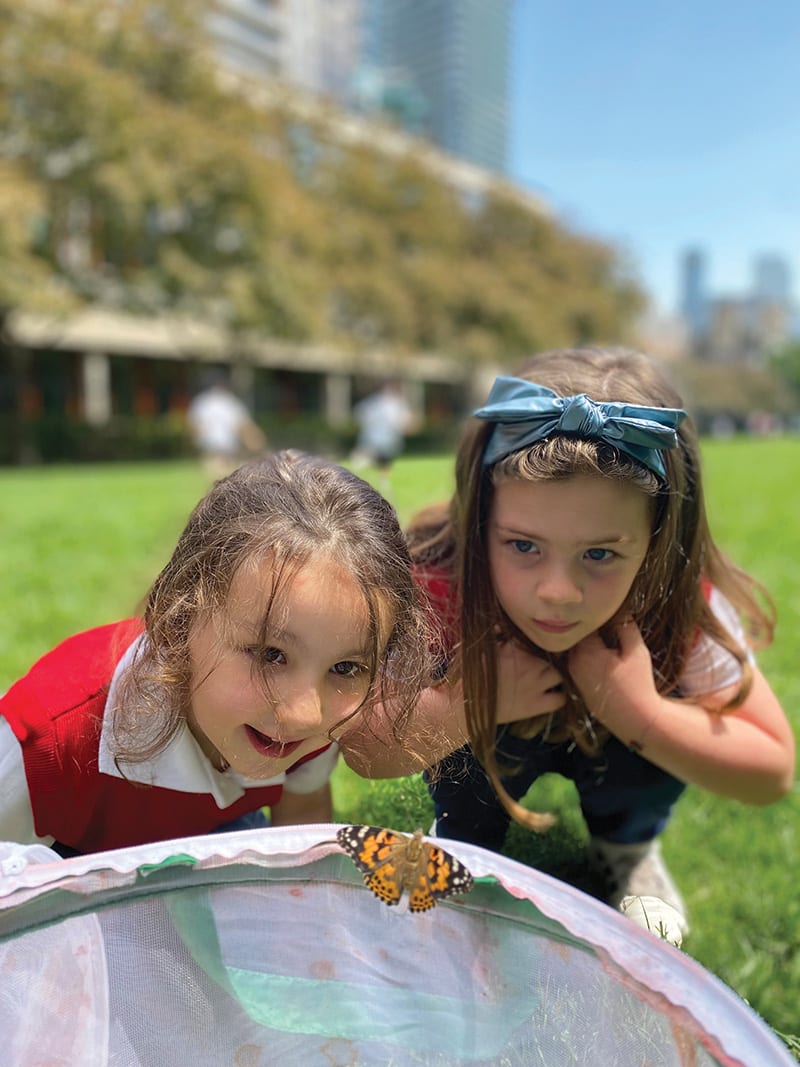
Key words for The Rosedale Day School: Balance. Community. Support.
Basics
RDS is a coed, Canadian Accredited Independent School (CAIS) for students from Junior Kindergarten to Grade 8 located on Bloor Street near Bay, smack dab in the centre of Yorkville.
If you’re coming on foot and arriving at the front door, you’ll pass stores like Cartier and Prada on the street level of the storied Colonnade building, which houses RDS. The school occupies much of the third and fourth floors of the Colonnade, which was one of Toronto’s first mixed-use buildings when it was built in the 1960s.
Today, RDS shares the building with high-end retail, residential, and commercial occupants. The Junior School (Junior Kindergarten to Grade 5) is on the fourth floor, while the Middle School (Grades 6 to 8) is on the third floor.
Visitors enter a pleasant, relatively spacious common space on the fourth floor via elevator, which opens across from the school office. It seems unnaturally quiet and too sedately decorated for a school, but only until you walk through the door to the classroom area where the lively sounds of learning and colourful student masterpieces on the wall reassure you that you’re in the right place.
In fact, it’s almost disorienting to suddenly find yourself transported to the familiar sights and sounds of a school, when outside the windows lining each classroom there are spectacular views of the city. Asked how RDS is different from other schools, one Grade 7 student says, “At most schools, there’s one building that’s the whole school, but here there are other businesses around us. You get used to it.”
“Our downtown location is truly an advantage" says Head of Enrolment Management Patrick Fordyce. Within a short walk students have access to wonderful sport facilities as well as enriching learning experiences at nearby museums, libraries and galleries.
Parents wonder what a school in a downtown building looks like, and they’re always pleasantly surprised,” says Patrick Fordyce. A lot of our families live downtown and enjoy the idea of a school leveraging and making use of nearby facilities. They aren’t expecting all of the facilities to be on site, but they want a first-rate student experience. We offer that by leveraging the fantastic amenities that surround us.”
Playing badminton at the Royal Canadian Yacht Club, tracking dinosaurs at the Royal Ontario Museum, taking gymnastics at U of T, or learning about wind instruments at the Toronto Symphony Orchestra-this could all happen in a week at RDS. Yet students still appear to be at least somewhat aware of the rarity of their school experience. As one Grade 8 student says, “It never gets boring going to Varsity Stadium, even though other schools might have their own gyms.”
Parents of children who have spent most or all of elementary school at RDS said their children were often surprised to learn from friends at other schools that field trips were annual, not biweekly, events. “For my son, it’s just the norm that he gets to go to all these extraordinary places,” says a Middle School parent.
Other parents chose RDS because they knew their children thrived on active learning and frequent changes in setting. “My daughter wouldn’t have done well sitting at her desk all day in a large class where this kind of flexibility isn’t feasible,” says one father of a Grade 4 student.
Some parents acknowledged that having a school in an office building has some limitations. “Leaving the school for gym classes uses up a bit of time,” says one. Another parent of a young student admitted to feeling worried sometimes when her son is on foot or on the TTC for trips. Both, however, stressed that the pros of being immersed in the city outweigh the cons.
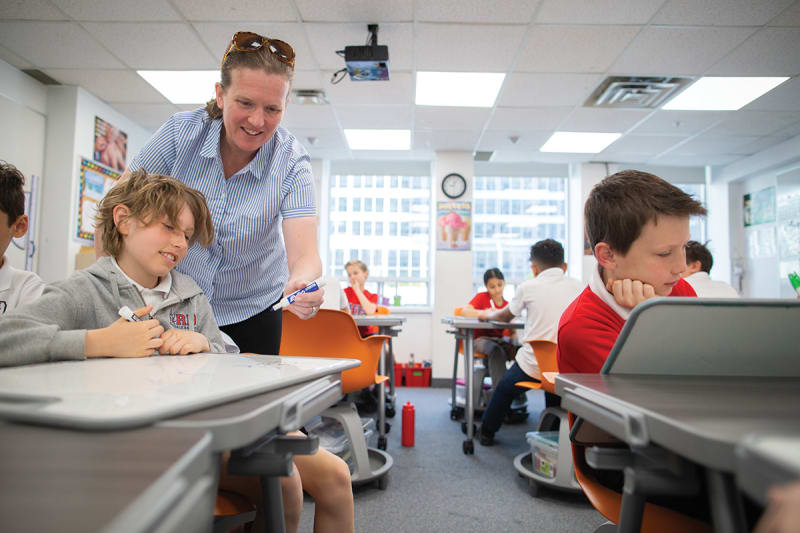
The school itself is bright, clean, warm, and welcoming. There’s only one class per grade, ranging from 16-20 students, and the classrooms are spacious and full of natural light. Glass half-walls open up the classrooms to the hallways, and we saw modern, flexible desks and seating along with separate cozy spaces with couches for reading and group work.
Both the Junior and Middle Schools have dedicated learning spaces: fully equipped art rooms, music studios, and an innovation lab. For rainy days, there’s a modestly sized indoor gym space with rubber mat floors-just enough wiggle room for a class of younger students to burn off some energy.
A new library was in the works when we visited. Again, it will be a relatively humble space compared with the massive, high-ceiling libraries of some independent schools. But those schools don’t have the Toronto Reference Library a short walk away.
Kindergarten students have a large, cheerful, fully equipped space. It's separated by a door from the rest of the Junior School, but it feels a bit like a world apart. There are two classrooms, one for Junior and one for Senior Kindergarten students, with a comfortable middle space for washrooms, a mini kitchen, and other amenities.
Parents whose children attended kindergarten at RDS said they appreciated the self-contained, non-intimidating environment. “I’d visited the local public-school kindergarten, and I knew the sheer size of the school would be overwhelming for my child,” says one.
The heart of the school, according to many teachers and students we spoke to, is the Student Success Centre. A relatively new space dedicated to providing all types of support—from academic to social and emotional—it’s a cozy, peaceful area for small groups and one-on-one meetings.
About one-third of RDS students take the TTC (the Bay Street subway station is across the street) or walk to school, while the rest drive in from all parts of the city, even as far away as the Beaches. Most parents live or work downtown, which offers the ease of dropping off the kids on the way to the office. Many parents told us they love the chance to use their lunch break to zip over to the school to take part in a community event like the Terry Fox Run or to watch their child receive an award at one of the monthly assemblies.
For drivers, there’s a handy kiss-and-ride option. A laneway behind the building allows for a convenient drop-off and pick-up with staff on hand to greet families. Parents can also use the underground parking lot free for 15 minutes.
Venturing into Yorkville every day by car is never going to be hassle-free. “Sometimes it’s frustrating, like when a car blocks the laneway or something,” says one parent. “But those instances are very rare.” Overall, the parents we spoke to seemed to accept Toronto traffic and construction as part of the deal, rather than complaining about inevitable disruptions.
On good weather days, students play in what they call the “back field,” which is in fact a greenspace of U of T’s Victoria College. “Drop-off and pick-up times give parents a quick little touch point with teachers if needed, and students feel safe and separated from the busy Bloor Street traffic out front,” says Fordyce. “They see their teachers, then they run around and play with their friends for a bit.” To get up and down to their classrooms, the younger students tend to take the elevator while the older kids take the stairs.
For an extra fee, families can opt for after-care, which runs until 6 p.m. Middle School students can sign up to study hall, enabling them to stay and work on homework until 4:45 p.m. under the guidance and support of a teacher. A hot lunch program, provided by The Lunch Lady, is also available for a cost. Uniforms, featuring red and navy, are mandatory, though there are casual days and ample opportunities to don RDS athletic wear.
Background
RDS launched in 1995 with four staff members and just over 20 students from Junior Kindergarten to Grade 2. Over the years, it’s stayed in the same location and has gradually grown to take over more of the building as enrolment increased.
Founder Sherry Stewart worked in several Toronto-area schools before realizing her dream of starting a new school. Her belief that “every child is unique” has remained the RDS motto and guiding vision. Current faculty who knew her say she was a passionate educator who wanted her school to be a place where all teachers and students knew each other and everyone was kind and thoughtful.
“She was probably one of the most loving, warm, and incredibly intelligent people I’ve ever met,” says Middle School Coordinator Julie Buwalda, who began teaching at RDS 25 years ago. “She wanted everyone to love to learn, and she wanted RDS to be a place where all students felt safe and comfortable.”
Stewart’s convictions about individualized education and the importance of relationships have endured over the decades, says Buwalda. “She understood that everyone learns differently and that teachers must adapt their teaching to meet students where they are. Sherry knew that school wasn’t easy for everyone but believed it could still be a wonderful place for children to be.”
Another of Stewart’s legacies is the priority placed on the faculty’s well-being at RDS. “She knew that the staff was the motor behind every school, and if teachers were happy then students and parents were happy,” says Buwalda. “She always listened to us as teachers and went out of her way to brighten our days. Our current head of school has the same philosophy, which creates such a positive culture here.”
Within about five years of its founding, the school grew to nearly 80 students from Kindergarten to Grade 6. This early success and parent requests led to RDS expanding up to Grade 8. “Sherry felt the middle school is a tricky time for students, and they need a lot of guidance,” says Buwalda. “She wanted to provide that guidance here and give older students all the enrichment the city had to offer.”
Stewart officially retired in 2010 but remained closely involved in the school until she passed away in 2022. The school now celebrates Founders Day each year to celebrate her lasting contributions to the RDS community.
Leadership
For Head of School John Reid, being an educational leader means promoting academic excellence, preparing students to thrive in a changing world, supporting great teaching, and creating an optimal learning environment. Yet he believes that to do any of these things well, a leader must create strong relationships across the entire school community.
“What gets me out of bed every morning is coming to school and being with the kids, teachers, and parents,” says Reid, who took the top position in 2021. “My whole leadership philosophy is grounded in building and nurturing trusting, mutually respectful relationships that drive our collective success as a school.”
Students come and go in his office, and they’re not there for discipline. “My door is always open, because I don’t think you can be successful in this role if you’re not an active participant in the life of the school community,” he says.
Teachers, parents, and students were happy to report that Reid is a fixture at school drop-off, and he’s always happy to fill in for staff absences, whether it’s teaching a class or running before-care activities. According to one parent, “He’s just very approachable, whether you’re a parent with a question or a student passing in the hallway. He’s open to feedback, whether it’s positive or negative.”
After graduating from Queen’s University with a Bachelor of Education, Reid accepted a job as a science teacher in Moosonee, Ontario, just south of James Bay. It was meant to be a one-year adventure but turned into four years after he fell in love with the job and the region. He left to do a Master of Education degree at the Ontario Institute for Studies in Education at the University of Toronto while working at Trinity College School, the first of several independent schools on his career path.
Stints at schools in British Columbia and in California followed, where Reid gained expertise in educational strategies for students with learning differences. “Often these kids just need an extra bit of encouragement and help, and they go on to achieve incredible things,” he says. “I discovered just how much I valued being part of that journey with students.”
At his last posting before coming to RDS, he added to his educational toolbox by being deputy head at a school in Calgary with a specialized institute focused on hands-on learning. “I was excited about the opportunity to come to RDS, this extraordinary little school surrounded by all of the unique facilities that this beautiful city has to offer,” he says. “I knew that it offered experiential learning not just for older students, but for the whole student body, which was right up my alley.”
The RDS commitment to individualized learning also held great appeal for Reid. “The school has always had a profound understanding of each child’s uniqueness and a dedication to offering tailored teaching methods and academic support,” he says. “I wanted to build on that.”
When he developed the new strategic plan, he consulted widely in the school community while ensuring that educational best practices and his long experience shaped the outcome. “One of the key results of that process was the RDS partnership with Future Design School,” says Reid. “We’ve made it our priority to prepare students to have the right competencies to be successful in a future that’s constantly being redefined by forces such as AI.”
He also led the charge to develop a permanent Student Support Centre at RDS, formalizing the school’s longtime value of meeting students wherever they are in their academic and social-emotional development. “It’s a purposeful investment that’s already paying off, and it aligns with the vision of our founder,” he says.
Enrolment has increased since Reid arrived, and he’s acquired more space for the school in the building. To be clear, though, he has no intention of growing RDS much more, instead endorsing the original mission to be a small, warm, welcoming community.
Another pillar of Reid’s leadership is promoting the personal and professional growth of RDS staff. “If we take care of them, they can focus on meeting their students’ needs,” he says. The teachers we spoke to attested to this feature of Reid’s leadership. “He has a great vision for the school and puts student and staff well-being at the forefront,” says Director of Student Life Tory Boeckh.
Academics
RDS’s academic programs deliver a learning experience that’s individualized, rooted in the real world, and constructed to foster skills that will be essential in the future.
“We’re always asking ourselves the same questions,” says Reid. “How does the student in front of me learn best? How can we expose students to meaningful experiences inside and outside the classroom? And what do we need to teach our students today so they’ll be successful 5, 10, and 20 years from now?”
Starting right from Kindergarten, there are consistencies across the whole school’s academic approach. First and foremost, the curriculum is student-paced and tailored to individual strengths. Inquiry- and project-based learning start from day one, for example, as do cross-curricular activities. Then there’s the partnership with FDS, which unites the curriculum around the importance of cultivating evergreen, real-world skills.
These evidence-based, progressive philosophies do not, however, displace the fundamentals that are essential to any elementary school. “Literacy and numeracy are big focuses for us,” says Assistant Head of School McGuire. “We’ve developed academic programs to ensure that students are at or above grade level in these crucial skills.”
In recent years, RDS has implemented daily structured literacy lessons, utilizing The Really Great Reading program. “It’s a structured, systematic, multi-sensory way of teaching students, whatever level they may be at,” says Junior School Coordinator Laura Trought. “There’s a lot of solid research evidence behind it, and our teachers have found it to be extremely effective.” We met a few parents of Junior School students who told us their children learned to read in Junior Kindergarten.
Using many types of media that appeal to all the senses—including animations, word tile boards, workbooks, and a computer app—the Really Great Reading program is ideal for students who crave variety and a bit of fun. It’s also perfect for customizing instruction, since it provides precise data on every student’s current ability, recent progress, and specific areas where they need extra help.
“When we assign homework, there are always three different worksheets to choose from, depending on whether students need to reinforce their learning or are capable of stretching to slightly higher levels,” says Trought.
The RDS numeracy program, Nelson My Math Path, is aligned with the latest Ontario math curriculum and informed by the Singapore math framework. Spanning Grades 1 to 8, it concentrates on mastering a limited number of concepts at a time while placing problem solving at the centre. At the same time, says Trought, My Math Path supports the RDS commitment to fostering a positive attitude toward all learning by encouraging students’ perseverance and confidence.
Just like the reading program, the math program is flexible enough that teachers can adapt its instruction, homework, and assessment to students who are struggling with certain concepts, right at level, or surpassing the current expectations. “The coherence across our literacy and numeracy programs creates a strong scaffolding for every student,” says Middle School Coordinator Buwalda.
The formalized partnership with FDS similarly enables RDS teachers to speak the same language and operate from the same value and priorities across the academic programs. While RDS has had a relationship with FDS since 2015 in terms of strategic planning and project-based learning initiatives, RDS became Toronto’s first independent school to be partnered with FDS in 2023.
With the partnership, RDS benefits from extensive professional development for teachers and broad-based, innovative programs for students. The Middle School is well into the implementation stage, and the younger grades will follow in the years ahead. Even in the meantime, though, every RDS teacher is embedding FDS learning principles into their instruction.
In practice, this means finding ways to integrate the key FDS skills—so-called “soft skills” such as critical thinking, creativity, collaboration, design thinking, and entrepreneurship—into the curriculum. “Big picture, it’s all about working towards the FDS profile of a future-ready graduate,” says Reid. “These are the skills that are essential above and beyond the curriculum content, the competencies that research tells us are important to employers today and will continue to be needed in an uncertain future.”
McGuire, who taught in many independent schools that provided the International Baccalaureate (IB) program, likens the FDS future-ready skills to the IB Approaches to Learning. “They’re both preparing students for a changing world,” she says. “So while our students are learning math, English, social studies, and the rest, they’re developing these competencies at the same time.”
In terms of what this looks like in the classroom, it depends on students’ ages, but it always involves connecting the curriculum to the wider community and world. “In a Grade 1 unit about responsibility in the community, we went to the food bank and learned about food scarcity and fundraised for a shelter,” says Junior School teacher Naomi Reed.
For middle schoolers, the applications are more comprehensive, often involving significant cross-curricular projects. When we visited, students were learning about the importance of critical thinking and constructive doubt in assessing bias and credibility in online sources. “The aim is to teach students to consciously develop and apply these skills now so that they internalize them and use them naturally in high school and beyond,” says Middle School teacher Carly Brown.
Middle School parents said they appreciated how the FDS parallel curriculum is preparing their children for the next steps in their education. “They take on real-world problems and use these vital life skills to find solutions together—something they’ll be doing their whole lives,” says one parent of a Grade 8 student.
The older students we spoke to were all aware of the FDS partnership and its objectives. “We’re learning things that we’re going to use in the long run, whether at school or working somewhere,” says one Grade 7 student.
According to McGuire, the FDS approach to assessment incorporates a “journey-based” approach, which includes observing and evaluating how students are collaborating in a group project. “We’re assessing the process, not just the destination or final product, so we offer continual feedback and a lot of different opportunities for students to demonstrate their learning in individual and group assignments.”
Every outing, whether it’s a quick trip to the Toronto Reference Library or a couple of days of outdoor education at camp, also fosters FDS skills ranging from curiosity and empathy to self-regulation and responsible decision-making.
Even at this early stage in the FDS partnership, the results are promising. In 2024, RDS Middle School students won the FDS Future Prize. Closer to home, at the RDS Spring Showcase, they demonstrated their "Water Availability" and "Island Design" projects for parents and the wider school community.
STEM learning is inextricably linked to future-ready skills, of course, and RDS introduces design-based problem solving starting in kindergarten. Over subsequent years, students gain frequent first-hand STEM experience through 3D printing, coding, robotics, rapid prototyping, and other maker-based activities.
On the subject of tech in the classroom, RDS takes a measured approach that mirrors many independent schools. “We value balance and developmental appropriateness,” says McGuire. “When it’s educationally useful for students to use a screen, they do. As far as phones in the classroom, we had a policy in place before the provincial guidelines, so our students are used to not having their phones during instruction time.”
Instilling responsible use of tech in students is just another part of the overarching RDS goal of arming students with the tools they need for future success. This includes creating an academic culture that, again, strives for balance. “I would describe it as academically rigorous, but not to the point where students are feeling incredible levels of stress,” says Reid. “We’re in the business of creating lifelong learners.”
Pedagogical approach
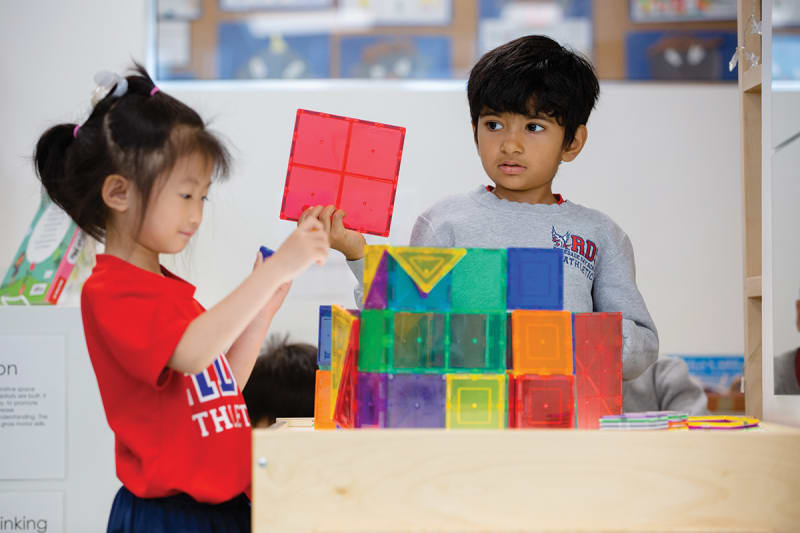
There’s a solid body of research that shows children must feel mutual trust and respect with their teachers to succeed academically. “Relational learning,” a method where teachers are constantly building this rapport with students, is the bedrock at RDS.
On our visit, we had the privilege of seeing several groups of students of different ages interact with their teachers in informal and formal settings, and the warmth and positive regard were readily apparent. “The best thing about this school is that the teachers get to know not just their own students, but most of the students in their division,” says Trought. “We truly care about our students, and we work hard to bring out their unique voices, increase their confidence, and create strong bonds.” A parent of two children who have attended RDS since kindergarten echoed many parents we met in saying, “The teachers really do know the kids as individuals.”
Trought spoke candidly about bringing her own two sons to RDS from another school where the classes were larger and teachers had less opportunity to establish individual relationships with students. “They never had the space in the classroom to be confident or be a leader,” she says. “Now they do, and they’re happy and reaching their academic potential. We take a holistic approach here and believe that students need to be emotionally and mentally ready to learn.”
The parents we interviewed all had examples of RDS teachers who found creative ways to bring out the best in their children. “My daughter excels academically but is very shy, and her teacher asked her to play piano for the choir, which sparked her confidence and led to her becoming a prefect and eventually valedictorian,” says one mother. “On the flip side, my son lacked confidence in his academic abilities, and the teachers and learning strategists (see Academic support, below) have worked with him to boost his sense of his own capacity and increase his personal responsibility around academic tasks. They both got very different types of support out of the school, but it was exactly what they needed.”
In our discussions with students, they communicated respect, but also warm regard, for their teachers. “They’re kind and caring, and they teach us, like, kindly,” says one Grade 4 student. A Grade 7 student echoed this sentiment, saying, “They always have time for us.” But one Grade 5 student couldn’t have summed it up better. Asked what his favourite spot at RDS is, he replied, “Definitely my classroom. No matter what year, I always love being in my classroom with my teacher the best.”
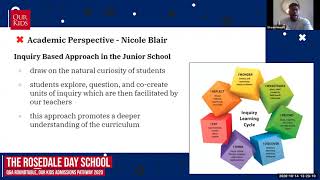
Along with positive teacher-student relationships, RDS prioritizes teaching methods that amplify student ideas, questions, and interests. The inquiry-based curriculum evolves in depth and complexity throughout the grades.
In the Junior School hallway, there are display boards with students’ photos accompanied by thought bubbles filled with their creative and varied responses to the prompt, “I Wonder....” These questions guide exploratory projects that run all year, says Trought. “Our students will take deep dives into their chosen topics, and of course we’ll guide and support them, but they’ll have the freedom to follow their curiosity.”
Junior School students enjoy a block of time dedicated to inquiry every Friday, while Middle School students have longer-term problem-based projects that cut across subjects. “We want the kids to be passionate learners, and they can’t be passionate if they’re not engaged,” says Trought. “They need to know that we as teachers are listening to them, and we trust them to dig in and learn relatively independently.”
Many of the parents we talked to were aware of their children’s “passion projects” and praised the inquiry-based methodology at RDS. “It’s one of the things I love most about the academic program because it’s a fantastic way of keeping kids interested and letting everyone in the class learn a little bit about their classmates’ passions,” says one Junior School parent.
Students expressed their appreciation for this autonomy. “With our assignments, we’re not always doing textbook things,” says one Grade 6 student. “We’re involved in a lot of different activities, and the teachers make it fun.” Another Grade 6 student says, “It’s good that we get choices, like doing a project for math instead of a test. And for a novel study, we might have a bunch of options like performing a skit, writing a letter to the author, or making a video.”
The friendly teacher-student dynamic at RDS is palpable, but so is the collegial culture among faculty members. While this isn’t unusual at a small school, it’s certainly not a given.
“We’re very selective in our hiring process to make sure that our staff thrives on collaboration,” says McGuire. “Even though we have one class per grade, it doesn’t mean that our teachers operate in silos. There’s constant consultation and sharing between the grades. The end result is that no student gets lost in the shuffle.”
Middle School teacher Carly Brown says teachers at RDS can individualize their instruction because of this close teamwork. “We spend a ton of time collaborating with other teachers to really make sure that every lesson and every assignment meets the needs of the individual child.”
Parents recognize the strong communication between teachers as an asset to students. Parents also commented on the commitment and energy they sensed in faculty members across the grades. “They all seem to be happy in their profession and willing to go the extra mile,” says one. Another adds, “They’re very engaged and enthusiastic. Most are involved in co-curriculars, which often meet at 7 a.m.”
With 10 years at RDS, Director of Student Life Tory Boeckh has seen the consistently high-calibre staff first-hand. “It’s pretty special here, compared with the other schools I’ve worked,” she says. “The staff are passionate about professional development and staying current on best practices and trends in education. We’re a pretty committed cohort, so we have the energy to give a lot, and we want to.”
Character education
The small, close-knit nature of this unique downtown community seems naturally inclined toward frequent, informal instruction in what it means to be a good friend and citizen.
“Character education is embedded in everything we do here,” says Reid. “It’s part of our history and our founder’s vision, and it’s completely integrated into the Future Design School’s portrait of a graduate, where the desired competencies include things like empathy, equity, social awareness, and emotional intelligence.”
All RDS students participate in the Second Step program, an evidence-based, social-emotional learning curriculum, yet teachers also never miss an opportunity to spark a discussion about common elementary school issues such as social media ethics and playground conflicts.
“A lot of the time, teachers remind us to be kind, and if there’s a problem there’s always someone on top of it,” says one Grade 4 student. The slightly older students we talked to could name the school’s four core values—integrity, respect, diligence, and involvement—while offering concrete examples where these came up in school life. “We often talk about specific character traits that will help us be a better person while also preparing us for our future lives,” says one Grade 7 student.
Monthly assemblies celebrate students who embody those core values alongside the academic and athletic stars. There’s also the RDS tradition of awarding the Golden Broom each month to the class deemed by the legendary custodian Regie to have maintained the cleanest classroom. Quirky, yes, but fully stocked also shines a light on the importance of respecting others’ service and basic courtesy in a communal setting.
Students’ frequent forays into the surrounding city afford plentiful opportunities to practice good citizenship. Service learning is integral to the RDS experience, with volunteer trips to shelters and food banks, fundraising for social justice causes, and participation in awareness-raising activities such as the Walk for Wenjack honouring those who attended residential schools.
Even the simple act of taking the TTC or walking the busy downtown streets is a lesson in character education. “They’re learning to share spaces, communicate respectfully, and behave appropriately in a very busy urban environment,” says Boeckh.
RDS teachers are proud to share that they receive positive feedback about their students wherever they go, though that doesn’t stop them from keeping a close eye from day to day. Grade 8 students can earn the privilege of going out to lunch once a week, an exercise in independence and responsibility. “I sometimes go to their favourite lunch spots and ask the employees about how our students conducted themselves, and I only hear good things,” says Middle School Coordinator Buwalda.
Parents spoke approvingly of the character-building that comes with being immersed in city life, with its inevitable highs and lows. “I wouldn’t want my daughter to be on an elite, isolated private school campus where the students are sheltered from all the realities, including things like homelessness,” says one Junior School parent. “RDS students learn, in an age-appropriate way, about real social issues and civic responsibility.” Another parent put it like this: “I think the school’s efforts help shape the students into better humans.”
Arts education
RDS students enjoy rich arts programming inside and outside the classroom. Specialized teachers and fully stocked studios encourage students to explore their creativity in visual art, music, and drama at every grade level.
The annual RDS Art Show, usually held at the Royal Canadian Yacht Club, brings out family and friends to celebrate students’ artwork, while the Winter and Spring Concerts highlight students’ musical talent. But the most anticipated and discussed arts event, based on our interaction with RDS community members, is undeniably the annual musical theatre production.
We got the inside scoop on the upcoming show (Annie) before it was officially announced and heard rave reviews of previous productions such as Matilda and Willy Wonka. “The whole school comes together, even kindergarten parents whose children aren’t in the show,” says Boeckh. “Students from Grade 3 to Grade 8 can be involved either as performers or behind the scenes, and it’s probably our most popular club.”
Students were visibly excited to talk about the production regardless of age, which is telling. “Almost our entire class was part of the play last year,” says one Grade 7 student.
To add to the appeal of the production, it’s put on at the University of Toronto’s Isabel Bader Theatre, a professional, 495-seat venue that’s often used by the Toronto International Film Festival. The school also uses Isabel Bader for all of its musical concerts, graduation, and closing ceremonies.
Academic support
High challenge with high support is the ideal at progressive schools today, and RDS’s significant investments in achieving this balance have paid off. As one longtime RDS parent says, “It’s supportive, but I know my children are getting a rigorous education.”
Differentiated learning—where teachers tailor their instruction, assignments, and assessments to each child’s learning abilities and interests—has been part of the school’s DNA from its founding. With the arrival of Reid in 2021, the emphasis on academic support has only increased.
“I saw an opportunity to strengthen and formalize the already robust support available for our students by creating a dedicated Student Success Centre,” says Reid, noting that it was important for the centre to have a physical footprint at the heart of the school. He also appointed a coordinator for the centre to work alongside the team of learning strategists.
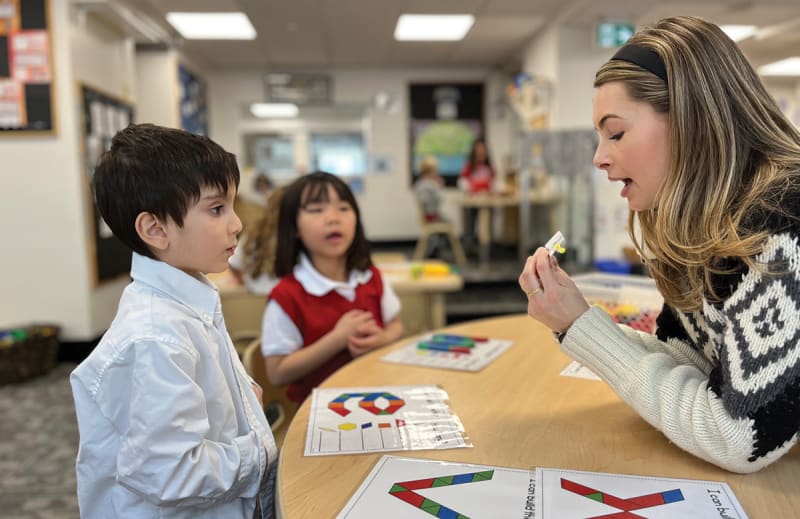
For a small K-8 school, it’s quite exceptional to have three full-time learning strategists, all with special education certification. They each cover a grade range, though there is crossover in their consultations with previous or future teachers. Parents will also be interested to know that RDS has associate teachers in Grade 1, Grade 2, and Grade 5 (the cohort that was in Kindergarten during the pandemic) classrooms to provide teachers with additional assistance.
“At a lot of schools, academic support is a bit of an afterthought,” says Middle School Learning Strategist and Academic Support Coordinator Claire Smith, who has a Master of Education in Developmental Psychology and Education. “Here, nothing is ad hoc. It’s a central priority. Our work is ingrained in every part of RDS programming. The whole academic schedule is built around student needs, whether it’s for extra support or enrichment.”
One of learning strategists’ key roles is consulting regularly with teachers on what’s coming up in the curriculum and how they can adjust their teaching to suit particular students’ learning styles. “Each week, we're talking about what lessons and assessments can be differentiated,” says Smith. “It’s a formalized process, so teachers can rely on our expertise.”
Every Junior School class has a learning strategist attend math and English classes weekly, allowing students to receive assistance in small breakout groups. “This also gives us the opportunity to observe students and assess what’s working or not working in terms of how we’re supporting them,” says Smith. In Middle School, learning strategists teach a full-year course on learning styles, time management, study skills, and social-emotional learning.
Meetings between individual students and learning strategists usually take place before or after school, so pulling students out of class individually is relatively rare. “We focus on pushing support into the classroom, especially when it comes to literacy and numeracy,” says McGuire.
There are multiple avenues to access extra help at RDS. “In the Middle School, students can sign up—or just show up—between 8:00 a.m. and 8:30 a.m. every morning to ask questions, go over homework, or just chat about their progress with teachers,” says McGuire.
According to Buwalda, teachers are open to students coming in at this time for either focused help or independent study. Middle School parents we interviewed said their children generally insisted on being there for this half hour, whether they needed it or not.
There’s also an open-door policy at the Academic Support Centre, so students can book time with a learning strategist whenever they have something to discuss. “There are some schools where it’s the norm for almost every student to have a tutor,” says McGuire. “Here, it’s not the go-to plan because students have such easy and ready access to help and advice.”
All the teachers we interviewed emphasized how seamlessly learning strategists integrate into the student experience. “They’re there from day one, assisting our students with speech and other issues,” says Kindergarten teacher Alexandra Stanley. “It allows for early intervention and continual monitoring through Junior and Middle School.” The school also has an occupational therapist and two speech language pathologists who come in weekly to work with students.
According to Stanley, having learning strategists in the classroom on a regular basis normalizes the idea that all children learn in their own ways and need different kinds of help to thrive. “There’s no stigma because it’s a natural part of students’ days here,” she says.
Students were at ease discussing the subject with us, often volunteering why and when they’ve had involvement with learning strategists beyond the classroom. “If you’re having a problem with a subject or a project, you can always get help, and if you’re ahead, they can push you a little and challenge you,” says one Grade 5 student. According to a Grade 7 student, “I feel like everyone needs help with different stuff.”
Parents expressed appreciation for the fact that academic support is so woven into the fabric of RDS that students don’t bat an eye if they or a peer need it. “I think it may be noticed, but there’s no judgment around it,” says one parent of a Grade 4 student.
Another parent of a Middle School student who has frequent individual contact with learning strategists pointed out that she feels like part of her son’s support team. “The learning strategist and teachers are very communicative about what’s going on,” she says. “I can talk to them about the current plan, so we’re on the same page at home around his behaviour, his academics, and his support.”
Wellness
At small, close-knit schools, the attention paid to students’ holistic well-being often happens organically. This is true at RDS, yet there’s also an intentionality about caring for the whole student.
The founder’s vision was for the school to be a haven for all students, and current Reid keeps this aim at the forefront of every decision he makes. “The research is very clear: students must feel safe and well to learn,” he says. “We don’t leave that to chance.”
The Academic Support Centre, established early in Reid’s tenure, in fact offers much more than academic support, with learning strategists offering mental health counselling, resources, and referrals to external healthcare providers. RDS has a formal partnership with Attuned Families, a leading child and family therapy centre in Toronto, which delivers teacher education, student workshops, and one-on-one counselling (the school covers a limited number of sessions, but parents can continue the sessions at their own expense).
The school also provides parent workshops in partnership with Attuned Families, a reflection of the RDS philosophy that caring for the whole child includes caring for their family. Recent sessions have included “Big Feelings Parent Skills” for those with children who are highly sensitive or struggling with anxiety, and “Sensitive and Strong Parent,” a two-day intensive workshop grounded in neuroscience.
Every child from Junior Kindergarten to Grade 8 benefits from the “Second Step” program, an evidence-based social-emotional learning curriculum. Yet this structured approach to fostering so-called soft skills such as self-regulation, conflict resolution, and healthy relationships sits alongside teachers’ constant, daily attention to student well-being.
“If there’s a teachable moment anywhere, anytime that relates to these issues, we’re going to take advantage of it,” says Junior School Coordinator Laura Trought. “This isn’t a once per week thing that we talk about and then move on from. We’re a very nurturing community and believe that if kids aren’t feeling well emotionally because of something that happened at home or at recess, there’s no way that they’re going to be ready to learn. We always address things in an age-appropriate and timely way.”
Interviews across the RDS community revealed a common foundation that holds up all the wellness initiatives: students feel a true sense of belonging at the school. Director of Student Life Tory Boeckh says, “This is a place where students can be themselves and be celebrated for who they are. We do a great job of really seeing and knowing our students and their families, giving them the right support at the right time, and making sure they feel like they’re part of our community.”
Extracurriculars
Involvement is one of RDS’s four core values, and you can see this in practice in the hour or so after the school day officially ends. The school is full of activity as clubs convene and athletic teams set out for practices or games.
“For many students, the co-curriculars are what makes them excited about coming here,” says Reid. “School is definitely about learning and academics, but it’s also about trying new things, finding out what you’re good at, and discovering your passions.”
Some smaller schools have correspondingly small co-curricular options, but RDS offers students the same depth and breadth of choices you’d find at much bigger institutions. By dividing the year into four co-curricular sessions, the school can deliver a frequently replenished selection of activities.
Starting with the play-based clubs for kindergarteners, there’s something for everyone. The exceptionally high enrolment in clubs—even among middle schoolers, whose engagement in after-school activities often drops off—is a testament to their appeal.
The key, says Boeckh, is to adapt each year’s offerings to current student interests. This approach goes back, again, to the RDS commitment to differentiated learning. “No two seasons of clubs are the same because we listen to our students,” says Boeckh. “My job is to offer them as many meaningful experiences as possible, whether we’re bringing ideas to them or vice versa.”
As with everything at RDS, balance defines co-curricular programming. “We make sure that we have an array of clubs that are active, artistic, STEM-oriented, and social justice-focused,” says Boeckh. On the active side, students enjoy sports clubs like kickboxing, spinning, squash, and badminton at nearby facilities.
The drama club, which mounts the much-loved annual musical, seems to bring in the most members. “It’s just an amazing experience, and you get to meet a bunch of people from different grades,” says one Grade 4 student.
The expectation and encouragement of involvement outside the classroom extends to RDS staff, who describe it as a perk rather than an obligation. “We love it when teachers bring their hobbies and expertise to clubs,” says Boeckh, adding that parents occasionally lead clubs too. “Students sense it when the people leading their activities are really passionate about sharing their skills and knowledge.”
Athletics
The imperative to make every child feel a sense of belonging at RDS extends to its athletics program. “It’s all about building students’ confidence, giving them the feeling of being part of a team, and allowing them to take chances,” says Boeckh.
Counterintuitively, this small school that prioritizes participation and makes no cuts on its teams does remarkably well in competition. There are five teams that run seasonally—cross country, basketball, soccer, swimming, and track and field—and the first and last on that list have taken home many wins.
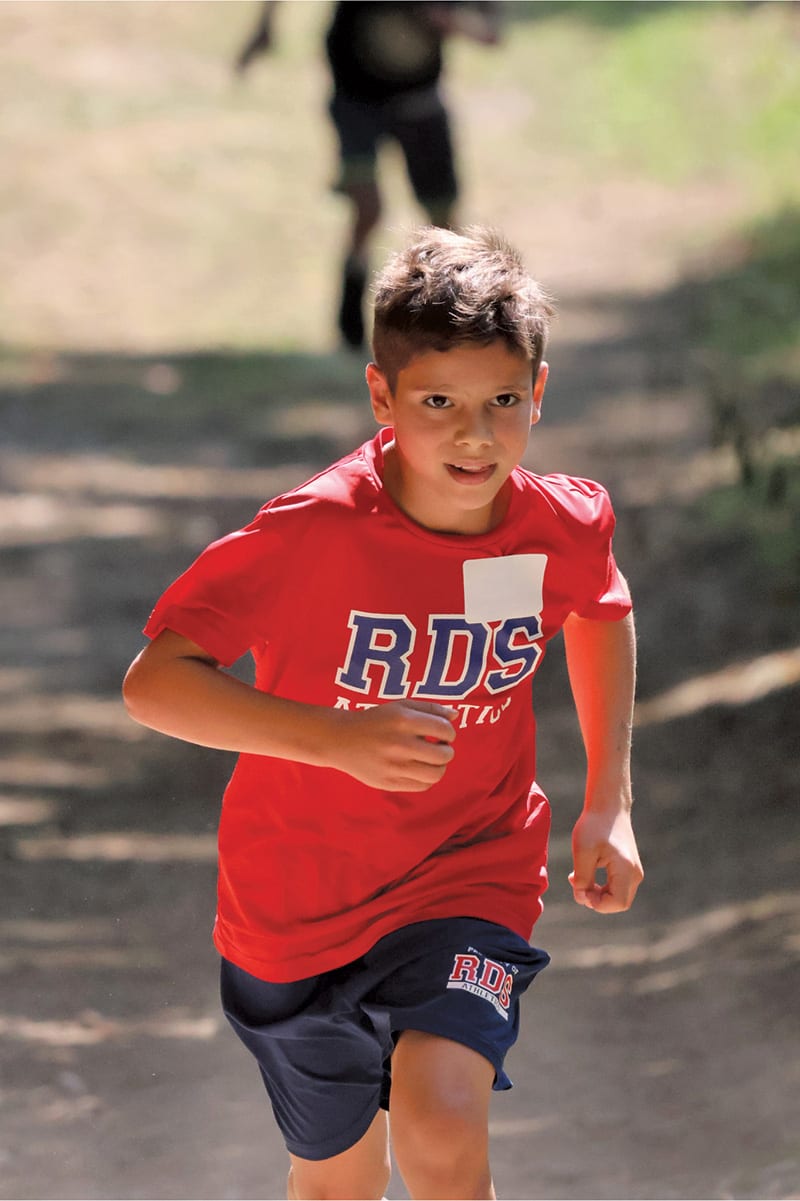
When we visited, cross country practices were in full swing at Varsity Stadium. The school hosts two popular cross country events, the Withrow Cup and the Annual Harrier Run, that bring together smaller schools in a fun and competitive environment. RDS is a longtime member of the Small Schools Athletic Federation (SSAF) and more recently joined the Conference of Independent Schools Athletic Association (CISAA).
Boeckh’s pride in RDS teams is apparent, given that she’s directed the athletics program for almost 10 years. “School sports are about providing opportunities for all students,” she says. “If you’re going to be a highly trained athlete, you’re going to be pursuing that outside of school unless you’re at a big school known for one particular sport. I consider sports to be the ideal arena for character education, whether it’s developing perseverance and resilience or learning to be part of a group.”
Students from Grade 1 onwards can join the cross country and track and field teams, but the other teams start in Grade 3. We didn’t speak to a single student on our visit who wasn’t currently or previously involved in at least one team, and several were on multiple. In fact, the newest athletic award handed out at the RDS end-of-year assembly is the Five Sport Athlete. For those who don’t manage that commitment, monthly assemblies honour both performance (Most Valuable Player) and character (Most Valuable Teammate).
Some of the parents we spoke to said they were surprised that their children joined athletic teams, having made assumptions about their abilities and inclinations. “I wouldn’t have thought my daughter would be interested, but it’s great,” says one parent. “And my son, who wasn’t that coordinated when he was younger and was shy to try, is on all the teams. There’s room for everyone to come out and participate.”
Another parent, who has two Five Sport Athletes at RDS, says the school gave her children the confidence to extend their athletic pursuits to teams beyond the school. “They never would have been the athletes they are now without those early opportunities.”
Trips and outdoor education
While field trips are infrequent and quite a big deal at most schools, they’re a regular part of the student experience at RDS. Not to say that the bigger outings aren’t much anticipated, but RDS students are seasoned day trippers used to zipping back and forth to the athletic, cultural, and natural hotspots around Toronto.
“The trips were definitely a big thing when I switched over schools,” says one new Grade 5 student. “It was one of the most positive things about moving, knowing that we had a bunch of different options apart from our school building.” Her classmates who had started their schooling at RDS recognize the uniqueness of their situation, but more from talking to friends at other schools. “They’ll say that they have a playground, and I’ll say we have, like, five different playgrounds that we can go to.”
RDS students don’t just explore their immediate vicinity. There are just as many outings to Toronto’s parks, ravines, and wetlands to study nature or just get outside and play. One tradition that many students and teachers talked about was the trek to see the salmon run in the west end.
While outdoor education is an integral part of the RDS experience, there are a few special trips that bring students directly into nature for fun and learning. Every fall, students in Grades 5 to 8 go on an overnight trip, rotating each year between the Outdoor Education Centre at Camp Kandalore and either Ottawa or Quebec City.
The Outdoor and Experiential Week each June caps off the year. Younger students participate in a day program with Alive Outdoors, visiting places such as the Toronto Islands, Sunnybrook Park, and the Riverwood Conservancy. Students in Grade 3 and up go to Camp Hurontario for two or three nights, depending on their age, to enjoy kayaking, archery, canoeing, rock climbing, and more.
Student body, leadership, and diversity
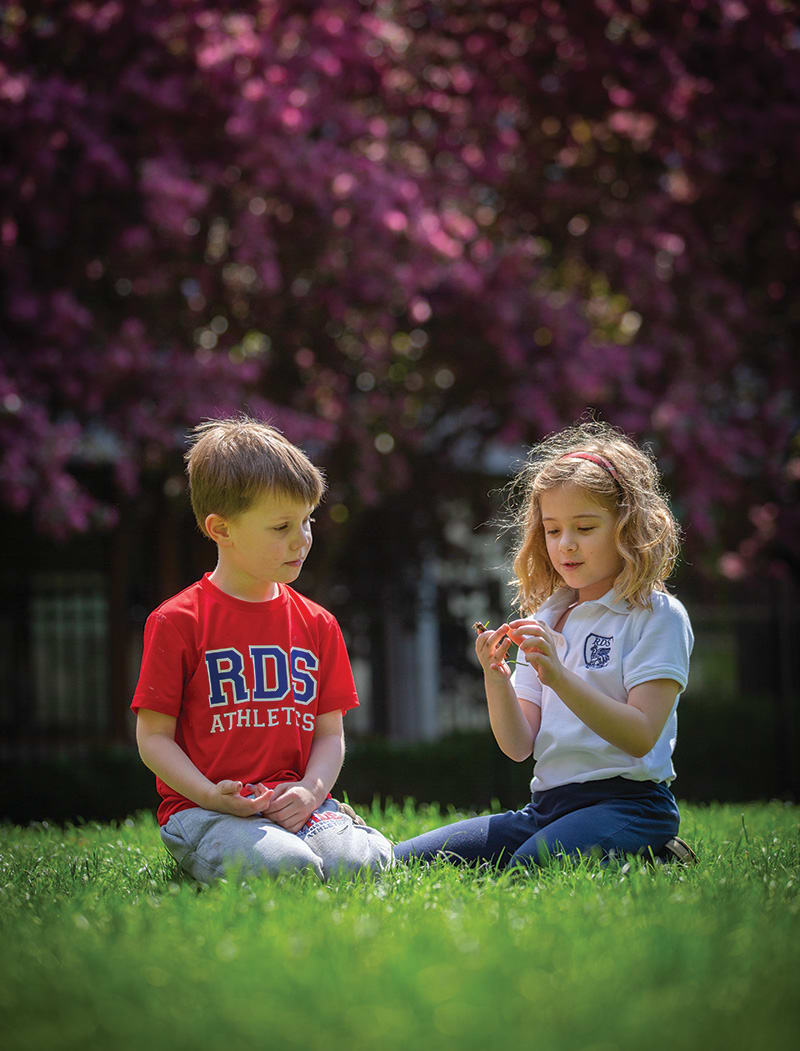
Community is everything at RDS. It’s the word we heard most across all of the interviews, but it’s much more than just talk. There’s an authentic feeling here of mutual care.
The modest enrolment and single class per grade play a big role in the sense of community. As one parent says, “The kids in each grade are stuck with each other over the years, but it’s a good thing because they all really get to know and support each other, even if they’re not best friends.”
The same sentiment came from students. “We’re such a tight and trusted community,” says one Grade 6 student. Another in Grade 7 said she has five people in her class that she’s known since JK. Several students also pointed out that they’re grateful for the cross-grade and school-wide activities where they mix with kids outside their class.
From weekly assemblies in the Junior and Middle Schools and monthly full-school assemblies to spirit days and friendly competitions based on the RDS House System, the school regularly provides vehicles for students to connect.
“They’re given the same social opportunities that any large school would offer,” says Junior School Coordinator Trought. Looking at the back field during drop-off time illustrates the strength of connections across grades, says Assistant Head of School McGuire: “There are always kids of different ages playing together, and older kids helping out younger kids.”
RDS cultivates student leadership through these informal interactions but also through a variety of programming. Starting in Grade 4, children can be Learning Buddies with the younger cohort, for example. “There are a lot of high-fives in the hallways, and it makes the little ones feel very comfortable and safe to know the older kids,” says Head of Enrolment Management Fordyce.
The school fosters public speaking from the earliest years, whether it’s presenting on passion projects in class or leading assemblies. “We build up a natural comfort and confidence at an early age,” says Kindergarten teacher Stanley.
In Middle School, the leadership roles expand. Students can be House Captains and Prefects, and every student sits on one of four leadership committees focused on issues such as equity and the environment. “We have teachers there for guidance, but students direct the committees, from coming up with project ideas, researching them, and implementing them,” says Middle School teacher Brown. “Throughout all of this work, students are using their Future Design School skills.”
Middle School students can also volunteer in the Junior School or help run clubs. There’s high demand for the positions. “It’s not forced,” says one Grade 8 student. “We do it because it’s fun and we want to.”
When it comes to the composition of the student body, it appears to reflect the surrounding city. “Our students represent Toronto in the sense that we’re very multicultural,” says Stanley. One parent guessed that about a third of his child’s classmates were first-generation Canadians.
There’s also variety at the socio-economic level, says Stanley. “We do have some affluent families, as you’d expect at a private school, but we also have many families with two working parents who might live in a small condo and prioritize their children’s education.” We heard this same characterization from several teachers and parents.
The school’s commitment to diversity, equity, and inclusion is evident on the ground, not just in documents and webpages. Parents frequently visit classrooms to share their cultural traditions, assemblies mark a wide spectrum of cultural celebrations, and students speak comfortably about the diversity of their friends.
Getting in
The RDS admissions process is typical of independent schools of its size, with open houses, application documents, and individual school visits. “My daughter attended one day at RDS as a trial, which she enjoyed very much,” says one parent. “Although she’s a very shy child sometimes, she felt at home.”
There is no ideal candidate, in alignment with the “every child is unique” school motto. “We’re looking for students with good character who embody our core values,” says Reid. “For example, involvement is key here, so children who are open to trying new things are a good fit.”
Tuition is comparatively low, with typical extra fees for after-care and study hall, co-curricular expenses, and major trips. “We’ve got a very competitive place in the market as far as our tuition,” says Reid. “Even with the investments that we’ve made recently in new facilities, we keep our increases reasonably small so there are no surprises for parents.”
There is some financial assistance for families with demonstrated financial need. An independent third party evaluates these applications.
Parents
Families are deeply integrated in all aspects of the RDS community. “One of the things that drew me here was the strong partnership between home and school,” says Reid. “It’s hardwired into everything we do. Our staff welcomes every chance to work together with parents on the business of raising kids.”
In our discussions with parents, they said it’s a true partnership. “One of the best things about the school is that parents are involved in almost every aspect of it,” says the parent of a Kindergarten student. A Middle School parent with nine years at RDS says, “The communication with parents is extremely open. Teachers literally have an open-door policy, and if I have an issue it’s immediately addressed.”
A weekly newsletter and parent portal are the baseline communication methods, but for quick chats there’s morning drop-off, where teachers up to Grade 5 greet families. Parents are also welcome to volunteer in multiple capacities at RDS. They can join the Parent Guild, the official volunteer hub, or simply lend a hand at special events and team competitions. Connections are also made at the various parent education workshops offered by RDS.
Some parents we met were very keen on regular membership in the Guild, while others preferred a more ad hoc approach. “I’ve been able to be very involved in the school, but on my terms, which I really appreciate,” says one parent of a graduate and a Grade 8 student.
Something that came through loud and clear in all the interviews was the strength of family connections at RDS. The parents seem to genuinely enjoy each other’s company and make a point of socializing outside the school.
“It’s such a great community of people,” says one Kindergarten parent. “We felt welcomed right away. Everyone is so invested in making the school a great experience for our kids.”
The school hosts family events such as the annual family skate, but families also get together for moms’ dinners and pub evenings. As already mentioned, several parents emphasized the lack of pretension in RDS families. “We’re mostly working families,” says one. “It’s not an elitist group, and we all want the opportunity to feel included in our children’s education.”
Alumni
The close-knit RDS community extends beyond graduation, with many graduates staying in touch and gathering regularly for reunions.
“It’s wonderful to see so many grads coming back each year to visit their old teachers,” says Middle School Coordinator Buwalda, who is also Head of Alumni Relations. “I attribute that ongoing connection to our size, but also to the culture and the strong relationships we build with our students.”
After graduation, RDS students go on to attend a wide variety of secondary schools, according to Buwalda. “Many of our students go to the big private schools in Toronto, some go to the arts schools, and some to the public schools in North Toronto. A few also go to boarding schools. I keep in touch with them and share their experiences with the current Grade 8 class to help their decision-making.”
Buwalda organizes two or three well-attended alumni events each year, including a dinner and a bowling night. In the near future, she plans to create opportunities for current students to connect with grads.