

The 2026 OUR KIDS Private School Expo is coming to cities near you. Get your family pass


Cambridge International Academy THE OUR KIDS REVIEW
Verified Review
OUR KIDS verifies every review by confirming the reviewer’s identity and their firsthand experience with the school. Learn more
The 50-page review of Cambridge International Academy, published as a book (in print and online), is part of our series of in-depth accounts of Canada's leading private schools. Insights were garnered by OUR KIDS editor visiting the school and interviewing students, parents, faculty and administrators.
Introduction
Cambridge International Academy is a ministry-inspected coed private school in Whitby that customizes and enriches the Ontario curriculum for students from Grades 1 to 12. Using customized planning that caters to the aptitudes and interests of students, it leads and guides students to achieve their academic and personal potential.
For elementary school, Cambridge International Academy personalizes the educational pathway and offers Reach Ahead credits to prepare students to successfully transition to high school. For high school, students have the option to take Advanced Placement courses to enrich their learning and gain a competitive advantage with university admissions.
“We customize students’ educational pathways,” says Sandra Arff, principal of the coeducational private day school in Whitby, Ontario. “I’ve always believed that a cookie-cutter approach to education fails too many students. It’s a methodology that doesn’t work for high achievers, because they get bored and become disengaged, or for students who are having difficulty, because they don’t get the attention they need to close the achievement gap. At Cambridge, we help both types of students reach their full academic potential by catering to their unique learning requirements.”
Class sizes in the elementary and high school range from 10 to 15. “No one can fly under the radar here,” says Yasmin Sinanan, head of academics. “Our teachers are always aware of exactly how each student is keeping up—or not keeping up—with curriculum expectations and ensure they receive the right challenges so that they can thrive in their educational studies.”
Nurturing teacher-student relationships is a priority at Cambridge, something that’s made easier with such small class sizes. Sinanan says there’s an expectation that teachers will establish a strong rapport with every student, since this bond creates the groundwork for learning. “We get to know them from day one, and not just on an educational level. We’re interested in their favourite subjects and where they’ve excelled or had trouble academically in the past, of course, but also in their hobbies and activities outside school. It’s all about building trust.”
Before the pandemic, the school catered to international and local high school students intent on applying to universities in Canada and overseas. The pandemic motivated Cambridge to expand its in-person and online courses to local elementary students, while maintaining its high school programs.
The lakeside location, along with the recreation center, enriches the student experience. Students go on frequent outings to the lakeside park and other fun attractions. Cambridge also enriches its educational offerings with a number of highly regarded educational tools, for example online learning platforms that accelerate math and literacy skills.
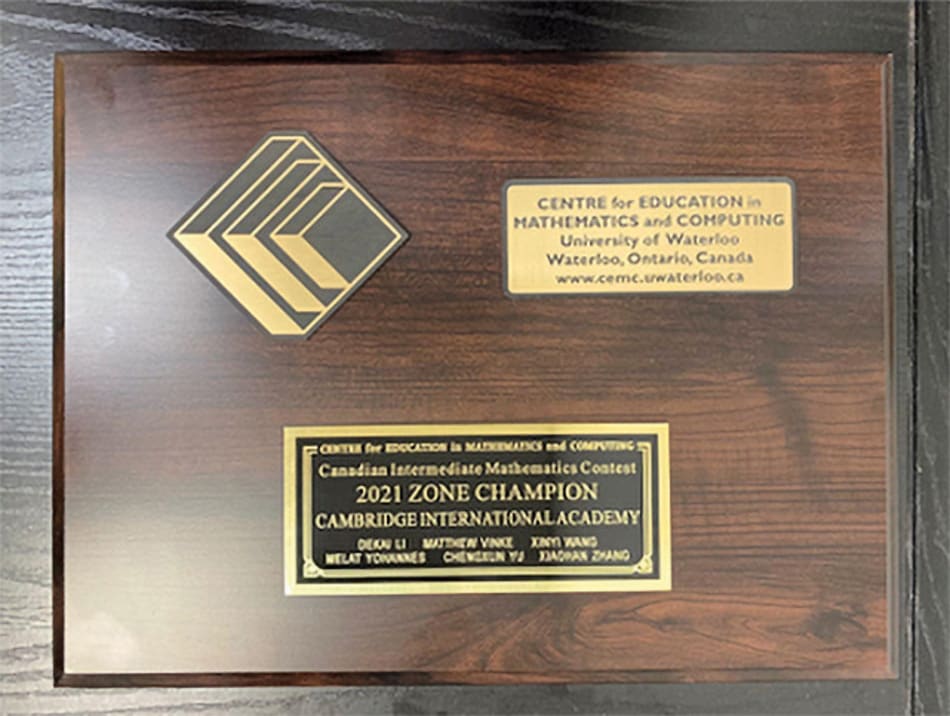
“Our fundamental belief is that every student is capable of success if they receive customized programs supplemented with appropriate resources,” says Arff. “We’re always challenging them to reach their potential through AP courses, Reach Ahead credits, and outside competitions. For example, our school won two Zone Champion Awards for placing number one in the Durham Region for the Canadian Intermediate Mathematics and the Euclid Contest from Waterloo University’s Centre for Education in Mathematics and Computing.”
Parents are always firmly in the loop when it comes to how their children are faring academically at Cambridge. The size of the school makes it possible for teachers and administration to maintain frequent communication with every parent. For new students, this involves comprehensive weekly reports on how they’re progressing across the subjects. “Close collaboration with parents is fundamental to how we operate the school,” says Arff. “We need everyone on the same page if we want students to thrive.”

Key words for Cambridge International Academy: Personal. Collegial. Supportive.
Leadership
Director Lin Lin obtained a bachelor’s degree from Jilin University. She worked at the university level in China for ten years and has continued to work in the educational sector since she immigrated to Canada in 2005. Lin is passionate about and interested in leading students to be successful in academic learning. Lin maintains a strong presence in the school’s day-to-day workings and is clearly dedicated to fostering student success. “The Cambridge philosophy is that a teacher’s role is to lead students to discover and make the most of their talents and strengths,” she says. “Every student, no matter what their grades are when they come to us, has the ability to improve and grow with customized educational planning.”
Principal Sandra Arff joined Cambridge 10 years ago. Based on her 20 years of experience in education, Arff promotes a safe, collaborative, and inclusive learning environment in which all students can reach their academic potential and experience school success. As the school’s academic head, she works closely with Lin. From our observations, they complement each other well. Lin has a friendly but business-like bearing, while Arff has a vivacious personality that radiates energy and enthusiasm. It was obvious to us that they share the vision of personalized education.
“Ms. Arff seems to be very passionate about learning,” says one Grade 9 student. “Whenever she gives presentations, she really catches people’s attention.”
Arff, who has a master’s degree in education from Queen’s University, describes herself as a lifelong learner and strives to instill this quality in all of her students. “I have that curiosity that propels me to always be reading and doing professional development workshops,” she says. “I want every young person to feel that drive to know more.”
In addition to her responsibilities as principal, Arff makes a point of teaching at least part of each day. “I love to teach and I don’t want to give it up,” she says. “It connects me to the students in a different way than if they only interacted with me as the principal.”
The students we spoke to described Arff as bubbly, patient, understanding, and fair. They told us that she accepts them, wherever they are on their academic journey. “Learning isn’t linear,” says Arff. “I tell my students that it’s okay to find yourself four steps forward one day and six steps back the next. It’s all part of learning, and it’s our job as teachers to guide you on that path.”
Parents appreciate her approach and admire her devotion to students. “She understands kids,” says one parent. “She taught both of my kids last year, and she really gets how they learn. She’s also always accessible to us. We can fire off a text or call, and she’s very responsive.” Says another: “She’s one of the top reasons why the school continues to bring in new students. She knows students and she knows education, and she’s clearly deeply committed to both.”
Basics
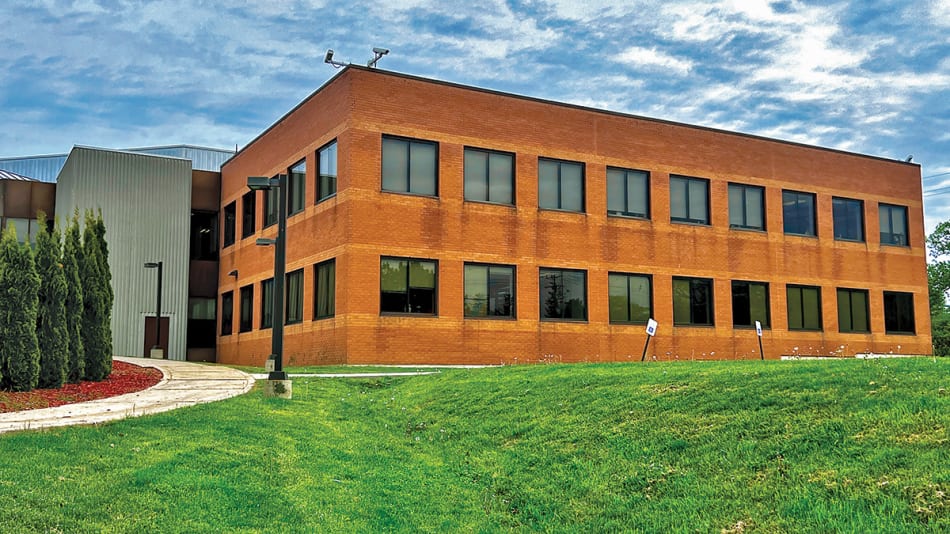
Cambridge International Academy currently has 250 students at its facility in Whitby, Ontario. The building is located in south Whitby with waterfront access. The faculty, staff, students, and parents appreciate the top-tier amenities and proximity to a waterfront park and a trail along the lake, offering students a natural environment just a few steps away from the school.
“Our priority is getting our daughter the academic support she wasn’t receiving in large classes, and we appreciate the opportunity for her to experience outdoor classes,” says one parent of a daughter in Grade 4. It is nice for the kids to now have a wonderful place to play outside. The children walk every day to the nearby playground, weather permitting, and take frequent excursions to places like Greenwood Conservation Area. Trips to the public library are also a regular feature of the students’ weekly schedule.
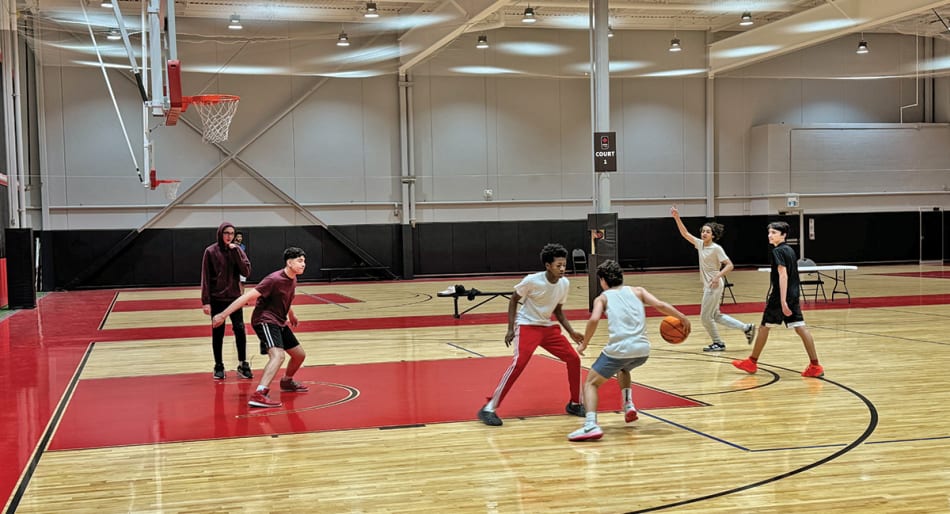
The school’s interior is warm and welcoming. There’s ample space for the students to spread out over comfortable common areas for lunch, clubs, or music practice. The spacious dining hall is framed by surrounding windows, offering a bright and inviting atmosphere where students can order hot, healthy foods during lunchtime. The recreation center enhances students’ school experience, providing access to an indoor soccer turf, two basketball courts, and a pickleball court. Students are required to participate in one sports club per week to develop an active, healthy lifestyle. Since the facility is located in a lakefront area, students also have the option to participate in water sports.
Classrooms are spacious and filled with plenty of light. Each classroom has a large screen for digital learning aids and student presentations. Overall, there is a comfortable feeling throughout the school. “The bricks and mortar reflect the amazing teachers and individualized support they provide,” says one parent.
New to the school is the C.O.D.E. Athletic Sports Program, under the leadership and direction of Cambridge International Academy’s athletic director, Mr. Nkosi Adams. The C.O.D.E. Athletic Program helps young athletes develop their sports skills by providing professional coaching, rigorous training, and exposure to high-level sports competitions locally and abroad. The specialized program focuses on building not only athletic skills but also personal character to prepare young athletes for the demands of professional sports. Under Mr. Adams’ leadership, this program emphasizes teamwork, discipline, and a strong work ethic to set students up for success both on and off the sports field.
Academics
Cambridge International Academy is a university preparatory school with small class sizes and a high university placement success rate, but its key differentiator is the “customized learning” program. This signature teaching method means students can blend one-on-one instruction in key subject areas with regular classroom learning. Whether students are falling behind and need intensive support or excelling and eager to move ahead of their grade level, customized learning caters to their personal educational pathways.
Cambridge International Academy offers Reach Ahead credits to Grade 8 students who are high academic achievers. “Students who are up to the challenge may take two to four Reach Ahead credit courses in Grade 8 so that they can experience the rigorous workload required to be successful in high school,” says Principal Arff. “The idea is not to hold students back in their learning. If they are capable and ready, Reach Ahead credits provide the opportunity for them to advance in their educational journey.”
Some students take advantage of blended learning, mostly in core subjects such as math, English, and science. The option is available to both elementary and secondary students. In practice, students receive individualized instruction for a portion of every day, then join a regular class for the rest of the time. The school’s physical layout reflects this customized educational approach, with a mix of classrooms designed to accommodate small classes and smaller breakout rooms for one-on-one teaching.
The parents we spoke to all listed Cambridge’s customized programs as their top reason for choosing the school. “My two children struggled in public school for different reasons—one because she was in French immersion, and the other because he has ADHD,” says one parent. “We initially enrolled my daughter at Cambridge to take advantage of the personalized instruction, but after we saw what a positive difference it made in her progression, we moved my son over, too. The personalized teaching is 100% why we chose the school.”
Cambridge has a fairly rigorous homework policy, and, not surprisingly, it was more popular with the parents we spoke to than with the students. “Generally there’s homework every day, especially in fundamental subjects like math and English,” says head of academics Yasmin Sinanan. “This is probably different from a lot of public schools, but it’s not necessarily hours of homework. The intent is to make sure students complete independent tasks that reinforce their learning. There’s some flexibility, for example on holidays or long weekends, and the Homework Club is always there to support students.”
Regular assessments throughout the year determine how students are doing relative to grade-level expectations in the Ontario curriculum.
Elementary
In the elementary grades, the school uses leading evidence-based language and literacy platforms. They’re the only school in Durham Region to provide Reading Plus, MyLexia, and Raz-Kids, which are web-based programs that improve students’ reading comprehension, fluency, vocabulary, and writing, as well as Wonders resources from McGraw Hill. “As a faculty we’re always open to exploring new digital educational resources for learning and assessment,” says Sinanan. “As a small school, we don’t have the barriers of bureaucracy and can quickly adopt the best new programs.”
“Another program that our students enjoy is the Elementary Reading Program,” says Arff, “which assists students to develop a love of literature while building and strengthening their literacy skills.” Students read independently for 15 to 20 minutes each day and respond to various reading activities from their reading book kits. The most distinct feature of this reading program is that parents commit to having two conversations a week with their child about the novel. Parents receive a set of conversational book starters and questions to ask their child. “The reading program got my youngest son interested in reading. He wakes up every morning to read before going to school,” says one parent with a child in Grade 5. “The reading program showed me how serious Cambridge takes education and I am grateful that my child can be a part of it.”
Cambridge delivers the elementary math program using the Singapore Math method. “It ensures students gain a solid foundation in key math concepts through practical, hands-on experience before moving on to more abstract problems,” says Sinanan. “The first stage of learning relies on manipulatives for concrete understanding. This approach builds confidence and a sense of comfort with mathematical thinking, which are crucial for success.”
Cambridge elementary students also benefit from an enhanced coding program that exceeds the new coding requirements in the Ontario curriculum. Instead of only integrating this 21st-century skill into math classes, the school has incorporated coding into every subject at every grade up to Grade 9. “We’ve embedded it across the entire curriculum to give our students a sense of coding’s possibilities,” says Sinanan. “Coding doesn’t exist in a silo in the real world, and it doesn’t here.”
Whether students are programming storyboards in English, timelines in history, or calculators in math, coding is a constant thread in their learning at Cambridge. “My daughter had never coded before, and now she can’t get enough of it,” says one parent of a Grade 3 student. “She’s constantly finding new applications for her skills, even outside of class.”
Arff says the enriched coding program has dual goals. “We’re not intent on all of our students becoming coders when they grow up. It’s more about familiarizing them with coding’s broad capabilities and having fun with it.” Rather than relying solely on elementary teachers to learn and provide coding instruction, the school brings high school computer science teachers into elementary classrooms for coding activities.
Despite the augmented coding program and openness to digital learning platforms, Cambridge values balance in the use of technology. Every student receives a Chromebook, but teachers monitor access to the devices. “We implemented this policy to moderate students’ time on screens, because we recognized that they were using them more than necessary,” says Sinanan. “So we put away the Chromebooks until they’re crucial to the instruction at hand.”
To prepare elementary students for the often-challenging transition to high school, Cambridge offers Reach Ahead credits. These optional credits allow Grade 8 students to take Grade 9 courses (up to four) in their strongest subjects. “It goes back to our essential philosophy of never holding students back from their potential,” says Arff. “We want to feed their curiosity and appetite to learn more. Reach Ahead credits also give students a real-life taste of the workload and expectations in secondary school, which can help them feel more prepared.”
Secondary
The high school operates on a four-semester model at Cambridge, as opposed to the standard two-semester system, and offers academic, applied, and open course types. Students take two to three courses per semester. With 2.5-hour classes, there’s more time for sustained focus and concentration on the day’s lessons, while allowing for longer experiments or group work. Just like at the elementary level, Cambridge enhances secondary courses with select subscription-based digital learning platforms such as IXL, Photomath, and Desmos.
The high school students we met said they appreciated the learning advantages of the low student to teacher ratio, particularly the ability to seek clarification on difficult concepts. Two of the students came to Cambridge from other countries, living with local homestay families vetted by the school, specifically for this intimate learning environment and the 100% university placement rate.
Customized university preparation is at the heart of the high school program. Teachers and counselors create a detailed, four-year map for every Grade 9 student that leads to their preferred university program. For students who may be unsure, the school offers a number of aptitude tests and one-on-one guidance on considering career objectives. “It’s not set in stone, because we know that students’ mindsets and aspirations may change over time, but it’s a long-term vision.”
Cambridge develops students’ personalized pathways in close consultation with parents, teachers, and the students themselves. “The cooperation of our teachers is vital, because they all need to be aware of students’ long-term plans,” says Arff. “It also helps to establish a trusting working relationship between the students and teachers, turning the teachers into mentors that students turn to for advice on university.”
The high school teachers we met laughed when asked about the role they play in university preparation. “We’re teachers and guidance counsellors rolled into one,” says computer science and math teacher Femi Saliu. His colleagues agree. Johnny Chang, also a math and computer science teacher, says he doesn’t hold back when it comes to making students aware of the study habits they’ll need to succeed in post-secondary education. “I start by coaching them on test prep, but my aim is to equip them to study independently, as they will at university.”
Students can take Advanced Placement (AP) courses, which are university-level courses and exams that may offer an advantage on post-secondary applications. More important, though, they align with Cambridge’s mission of maximizing students’ readiness for the next stage of their education.
Online
Cambridge has about the same number of high school students studying abroad virtually as it does in person in Whitby. The school even has a separate academic director to oversee the online academy, which offers asynchronous instruction, since the different time zones make it impractical for someone working at the in-person school. The online student body also includes students in different provinces who have demanding schedules, such as elite athletes or musicians. The virtual programs provide the same degree of customization and flexibility.
There’s also an after-school online program offering Ontario credits. “This option is quite popular with a lot of parents who feel that their children aren’t getting enough homework at their home schools and they want to supplement or solidify their [children’s] learning,” says Sinanan. “They might enrol them in core subjects such as science or English at the same grade level, or one grade below or ahead.”
Academic support
Customized instruction is foundational at Cambridge. But it’s not the only way the school supports students who may need one-time or ongoing help.
“We strongly recommend that parents choose blended learning if their children are working significantly below grade level,” says Sinanan, who notes that many of the school’s elementary students have Individual Education Plans (IEPs). “For those students, we don’t like to use the language of ‘catching up.’ We can’t work miracles or make guarantees, but we can always promise growth. Overwhelmingly, the feedback we get from parents is that they can’t believe how much better their children are doing after personalized instruction. Of course the goal is always to get to grade level, but we focus on what students can do and then build on it in the hopes of getting there.”
Every Cambridge student can access the Homework Club, which operates from Monday to Friday from 3 p.m. to 4:30 p.m. The club gives students a safe space to work on immediate assignments and long-term projects, or seek help with certain concepts, under teacher supervision. “We know that it’s often hard for students to concentrate when they’re in their home environment with all the distractions,” says Arff. “Taking an extra hour or so at school to do what they need to do, in a suitable environment with the proper support, allows them to go home and enjoy the rest of their evening.”
Parents appreciate that the Homework Club is there when their children need it. “When my daughter starts to coast and is in danger of falling behind, we’ve used the club to get her back on track,” says one parent of a student in Grade 6. As for the students, they seemed to recognize the value of having direct assistance always available. “A lot of kids use it, which makes sense because it’s easier than trying to figure things out alone once you’re home and tired,” says one Grade 12 student.
Cambridge also delivers academic skills seminars and workshops after school. From organizational strategies to essay-writing and presentation skills, teachers and administrative staff share practical tips and tricks for getting the most out of courses. “We sometimes take it for granted that students know how to take notes and study by the time they reach the upper elementary grades,” says Arff. “But that’s often not the case, and these abilities are critical for success in high school and beyond. So we decided to be very intentional in teaching students how to learn in the most effective and efficient ways.”

Character education
Cambridge takes both a formal and informal approach to instilling desirable character qualities in students. Every month, the school focuses on one trait and hands out awards to students who exemplify it. During the weekly character education instruction, principal Sandra Arff or teachers explore the featured topic through lessons, readings, and discussion. Often the school will invite relevant members of the external community to come in and speak about the month’s theme, such as when Durham Region police officers came in to discuss trust and responsibility.
But Cambridge goes further than this compartmentalized approach, integrating character-related instruction across the curriculum. “We don’t just dedicate 45 minutes per week to character education and say we’re done,” says Arff. “It’s our responsibility as educators to make it part of everything we do, so that we’re reinforcing what parents are doing at home to raise their children to be responsible citizens.” Parents told us that the school’s efforts are apparent in their children. “I’ve noticed that my son has taken in a lot of these messages, and it’s led to important conversations at home,” says one.
Every Cambridge teacher we spoke to agreed that character education underpins the whole curriculum. “We encourage all of our teachers to talk about the month’s character trait within the context of their lessons, but also to highlight any instances where character is salient in the daily life of the school,” says Sinanan. “We point it out when we see students demonstrating respect or kindness in their interactions at lunch or recess, for example, or when they’re being responsible citizens when we’re out in the community. It’s about making them aware of the everyday importance of good character and making it a goal they aspire to.”
Pedagogical Approach
Principal Sandra Arff says the teachers at Cambridge International Academy are a diverse group with one common thread: they view teaching as a vocation, not just a job. “When we hire, we look for people who really care about the well-being of students and want to be part of their personal and academic success. We want teachers who come to work excited and inspired, not just to put in the hours and clock out.”
“It’s not a piece of paper that tells us you’re a great teacher,” says Arff. “It’s advantageous to have the credential, no doubt about it, but it’s not a guarantee. Being an exceptional teacher is something that’s within you. Our teachers recognize and value students’ voices and take their opinions and ideas into consideration in classroom decision-making. It’s reciprocal. I always tell my students: ‘You learn from me, I learn from you, and I hope one day you excel and surpass me. Then I’ll know I’ve done my job as a teacher.’”
In our observations, the teachers at Cambridge take fierce pride in their school and their students. Their collegiality is readily apparent, something they say is a product of the small faculty and strong sense of community. “Normally there’s a bit of division between elementary and secondary teachers at a school,” says high school teacher Eiger Tolledo. “But here we know all of our colleagues and interact on a daily basis. We’re not shy to ask each other for teaching help because someone is always willing to share suggestions or resources.” Shathusha Paval, a Grade 7/8 teacher, echoes this: “We know all the students across the grades, so if we need advice on one who’s having problems it’s easy to find other teachers to collaborate with and problem-solve. It also helps that the faculty are all friends and very supportive of each other.”
There’s no single teaching approach at Cambridge. Instead, the school takes a flexible stance, fostering a mix of methods that promote personalized learning, academic growth, and strong student-teacher relationships. “We believe there’s no such thing as the best new methodology,” says Arff. “It’s a concoction of whatever works best for each student. We’re all unique learners, so over the years I’ve come to understand that it’s our responsibility as educators to find the best way to inspire and motivate our students to become lifelong learners.”
In delivering the Ontario curriculum, Cambridge teachers know they have Arff’s support when it comes to creative customization. “We deliver the curriculum with a twist,” says Arff. “The twist is when teachers recognize students’ strengths and interests, then adapt their teaching and content accordingly. That’s how we grab students’ attention and get them excited and enthusiastic about learning—when they see relevancy to their lives and interests.”
Eiger Tolledo, who’s been teaching math, science, and business at Cambridge for three years, shared a perfect example of this “twist” with us. “One of the students in my physics class this year was having trouble engaging with certain lessons, and I knew he had a particular interest in film,” he says. “So I thought of ways to incorporate filming into some of the class’s experiments. Because we’re a small school with forward-thinking leadership, it’s almost always possible to buy the resources we need for unique projects like this. We got the equipment and designed experiments that all of the students—not just the one who was disengaging—wanted to be part of.”
Yasmin Sinanan, head of academics, says much of her role involves paving the way for this kind of innovation. “Whatever new ideas our teachers come up with to reach their students, we make them happen by removing the roadblocks, buying supplies, getting permissions, etc. Our great teaching successes always come from teachers taking the initiative to say, ‘The usual way isn’t working, this is my suggestion and this is what I need.’”
Teachers’ overarching goal is to deliver the curriculum in an individualized, experiential, engaging way. Sinanan cites the example of one Grade 5/6 teacher who was teaching human body systems. To help students visualize the concepts, she created a larger-than-life paper body cut-out where the children could draw in each system after they studied it. In the end, it literally embodied all of that unit’s learning. “It was a teaching aid and a work of art,” she says.
Customized teaching
“We meet every child at their level with the teaching approach that suits their learning style best,” says high school math teacher Femi Saliu. That may mean giving them the extra push to stretch their understanding and take on higher-level tasks. High school math and English teacher Sumia Matin offered this example during our visit: “I had an exceptional student recently in my Geography class, and I found ways to take him above and beyond the curriculum and his peers’ capabilities, while keeping him integrated in the life of the class. I provided advanced reading and reflection assignments for him, and we had many enriched discussions. Our small class sizes allowed me to extend his learning and tweak my lessons as necessary to keep him interested and motivated.”
Grade 3/4 teacher Heniesha Christie notes that customized teaching requires patience. “The students we get here are all very different. Taking the time to truly understand their needs and focus on catering our teaching to them is always worth it.” Sometimes, this involves taking a step back in the curriculum for certain students to reinforce their grasp of key concepts before moving forward, says Grade 7/8 teacher Shathusha Paval. “Our teaching is always very interactive, so we’re constantly aware of how well each student is comprehending things. If they’re struggling with a certain knowledge block, I just shift to reviewing lessons they may have forgotten or missed during the pandemic.”
Cambridge teachers work diligently to identify and draw on students’ natural talents. English teacher Nicole Bodh offered this example: “I was doing a novel study in my one-on-one class, and my student was reluctant to do a lot of writing. I knew he loved art, so I had him draw each chapter on the board and explain the plot to me. He was really excited to do this and demonstrated his comprehension just as well.”
In our conversations with Cambridge students, we found a genuine appreciation for their teachers’ willingness to bend their instruction according to what’s most effective for each student. “When you’re in a small class, the teacher knows exactly where you’re at and adjusts to your pace,” says one Grade 8 student. “You don’t have to wait until 30 other people have gotten it. You can just move forward and go in-depth on the things that interest you.” Another Grade 12 student added, “It’s not like other schools I’ve been to where they just keep teaching their lessons no matter what’s happening with us. They actually care about which parts you’re liking and whether you’re understanding it.” Students also commented on their teachers’ willingness to accommodate unusual circumstances. “They don’t put huge pressure on you if they know you have a lot of stuff due in other classes,” says another Grade 12 student. “They’re fair about taking into account individual issues.”
Parents appreciate this personalization at both ends of the learning spectrum—when their children need extra help and when their children are equipped to extend beyond their grade level. “The teachers worked with us from the start to determine exactly where our kids were running into barriers,” says one. “By combining this knowledge with initial assessments, they were able to hit the ground running.” Another parent, whose children had come from a Montessori school, liked the fact that the teachers immediately recognized the kids’ capacity to do advanced work. “They’re just so responsive to the needs of every student and never leave a student bored or waiting for others to catch up.”
Flexible assessments
Cambridge is very much in line with other progressive schools in offering students multiple ways to demonstrate their mastery of a subject. It’s an extension of the school’s commitment to customized learning, says Sinanan. “Assignments and assessments don’t always have to rely on pencil and paper or laptops, though they’re very important and sometimes unavoidable. Our teachers always try to provide students with plenty of choices for capturing their knowledge.”
French teacher Annissa DeFreitas encourages her students to choose the evaluation modes that feel like the best fit for their skills and passions. “If they love visual art, they can draw a poster, but if they love digital design they can create a PowerPoint,” she says. “Sometimes they can build models, perform skits, or give presentations.” Recently, many Cambridge teachers have adopted Edublogs, a platform that enables students and teachers to create blogs and websites for educational purposes. Students told us about creating digital portfolios of their work with this tool.
The school introduces students to presentations and public speaking early, often around Grade 3. Arff believes these communication skills are must-haves for well-rounded students, no matter what discipline they plan to pursue. Sinanan agrees, saying the ability to talk to people in a clear and convincing way is more crucial than ever in our increasingly digital world. “This is a transferable life skill that students will need no matter where they end up in their career search, and no matter how exceptional their academic achievement is,” she says. “We aim to promote some level of comfort with public speaking in all of our students, while recognizing that it can be very hard for some. If students are extremely anxious about presentations we begin slowly, maybe by asking them to record a short talk and play it for the class. In the safe space we provide, we find most students overcome that fear quite quickly.”
Relational teaching
There’s a large body of pedagogical research that shows students learn best when they have trusting, positive relationships with their teachers. At Cambridge, this relational method of teaching informs every aspect of the educational enterprise. According to English teacher Nicole Bodh, she and her colleagues make a point of regularly asking students about non-academic matters, just to demonstrate that they see them as more than students. “They may not respond every time, but we know that they appreciate us checking in to see how life is going for them.”
Cambridge is intentional about having teachers lead clubs and other extracurricular activities. It’s another way for them to connect with students—in different settings and with different aims than the regular classroom. “When I’m playing basketball with my students and students who aren’t in my classes, they see me in a different light, and vice versa,” says math and computer science teacher Femi Saliu. “It helps to promote a sense of community across the school.” His colleague Annissa DeFreitas agrees. “It’s important for the students to know me as more than the French teacher,” she says. “That’s why I volunteer for recess duty, where the environment is more playful and relaxed. The students get to know me on a more personal level, which makes them comfortable with me in class.”
Though there’s no formal wellness program at Cambridge, the school’s commitment to ongoing character education and relational teaching combine to create a climate where social-emotional well-being is a priority. “Almost all of the teachers here have an open-door policy when it comes to students popping in to ask questions or seek help with issues that may or not have to do with academics,” says math and business teacher Eiger Tolledo.
In speaking to teachers and students, it was clear to us that the Cambridge faculty double as mentors and guidance counsellors. “I always tell my students that I’m there for them if they need to talk,” says Grade 7/8 teacher Shathusha Paval. “I notice when they’re down, so I want them to seek me out during recesses, at lunch, or after school.”
Very small class sizes and strong student-teacher bonds contrast starkly with many students’ experiences in public schools, however, and it’s easy to see how some students might take some time to adjust to the new dynamics. One parent we spoke to said his two children loved the more friendly, relaxed classroom atmosphere after transferring from their old school. But one time, soon after he arrived, his son overstepped the bounds and made an inappropriate comment to his teacher when they were joking around. “The teacher immediately spoke to him and helped him see how his words weren’t okay,” says the parent. “She helped him navigate the situation and turned it into a teaching moment. It was another example of how Cambridge teachers are constantly working together to ensure the students become well-adjusted, well-rounded individuals, beyond the academics.”
Director Lin Lin says the school operates according to a “student-driven, teacher-led” model. “We combine the traditional way of teaching, where teachers are the guides, with a student-centred approach, where the children’s voices are always heard and valued.”
Peer-to-peer learning
Cambridge teachers recognize that sometimes peers learn best from each other. Small class sizes make it easy for teachers to identify each students’ strengths and challenges, so they can create pairings and groups that are mutually beneficial.
Johnny Chang, Vice Principal, who teaches senior-level high school math and computer science, says peer-to-peer learning is especially beneficial for students who are reluctant to raise their hands—even in a small group—when they don’t understand the lesson. “Students often feel more comfortable admitting to each other one-on-one that they’re not getting it, and they become more open to asking questions. On the flip side, even students who are excelling benefit from having to explain complex content. It deepens their comprehension of the subject when they’re helping their classmates master these concepts.”
The same principle applies to matching up students with different levels of mastery in learning skills such as test preparation or public speaking. “When we have presentations, I put students with weaker and stronger oral communication skills together,” says DeFreitas. “Every time, I see growth in both students.”

Extracurriculars
Cambridge International Academy’s student body is rich in diversity for its small size. The school’s history as a destination for international students lives on, with a handful of students from other countries attending Cambridge along with students from and outside of the Durham Region. The local student population represents the racial and cultural diversity of the area.
The school promotes inclusiveness of diversity in all its forms, says Arff. “When students from different cultural backgrounds come together, it enhances the learning experience for everyone. We teach our students to be respectful of different perspectives and opinions, and we model this approach as teachers.” In our conversations with both elementary and high school students, we found strong consensus on the fact that Cambridge is a welcoming space for everyone. “Everyone knows each other, no matter what grade you’re in,” says one Grade 4 student. “Nobody is mean to anyone, and we treat everyone as friends.”
According to an international student who arrived in Grade 12, students made him feel accepted and a part of things from the moment of his arrival. “I felt like this was a safe place to be, and I didn’t experience any discrimination. Joining clubs and playing sports helped me interact with other students and become friends. Now we get together outside of school too for movies and things like that.” Parents appreciate the attention to diversity in the school’s celebrations and special events. Says one: “I like that my children can learn about different cultures directly from their classmates, such as when students are invited to give presentations and bring in their home cuisine for everyone to try.”
The teachers we met described a friendly, supportive, cohesive student community, citing specific examples they observe in their classrooms. Grade 7/8 teacher Shathusha Paval says her students are aware when someone is not grasping an assignment and offer encouragement. “They’ll say, ‘You’re almost there. You’ve got this.’ And I’ve heard several students describe Cambridge as one big family, which is nice to hear.”
The camaraderie among teachers trickles down to the students, says math and English teacher Sumia Matin. “It creates positivity and a sense of community in the environment that the students can detect. They see teachers treating each other with respect and generosity, and they do the same. It makes me proud.” Matin and her colleagues also spoke proudly about how their students treat the few students with special needs at the school. “I’ve watched students during lunch hour or recess make a point of including those students in whatever they’re doing, whether it’s the chess club or a board game. This thoughtfulness and cooperation at the school is why I think the kids like coming here every day.” Her colleague Annissa DeFreitas, a French teacher, echoes this observation: “Whenever there’s group work in my class, the children go out of their way to include the student with additional needs. They’re very caring individuals.” One parent of a child on the autism spectrum we spoke to confirmed these observations: “My child is very happy at Cambridge, and she wasn’t at her previous school. I’ve seen the students’ kindness firsthand, like when I went with them on a field trip. They’re a nice group of kids.”
Some students and parents voiced a desire to see the student body grow—as planned—but not too much. “The biggest challenge we had in moving our two children here was their reluctance to leave a school where they had lots of friends and access to large sports teams,” says one parent. “It took a little while, but they both settled in and made friends. Now they want to stay through high school.” Another parent of two students said she’s glad Cambridge is growing, since it will expand the social context for her children, but she wants the expansion to be limited. “The school’s small size ensures every student gets the attention they need to perform to their maximum capabilities.”

Student Body/Diversity
Cambridge International Academy’s student body is rich in diversity for its small size. The school’s history as a destination for international students lives on, with a handful of students from other countries attending Cambridge along with students from and outside of the Durham Region. The local student population represents the racial and cultural diversity of the area.
The school promotes inclusiveness of diversity in all its forms, says Arff. “When students from different cultural backgrounds come together, it enhances the learning experience for everyone. We teach our students to be respectful of different perspectives and opinions, and we model this approach as teachers.” In our conversations with both elementary and high school students, we found strong consensus on the fact that Cambridge is a welcoming space for everyone. “Everyone knows each other, no matter what grade you’re in,” says one Grade 4 student. “Nobody is mean to anyone, and we treat everyone as friends.”
According to an international student who arrived in Grade 12, students made him feel accepted and a part of things from the moment of his arrival. “I felt like this was a safe place to be, and I didn’t experience any discrimination. Joining clubs and playing sports helped me interact with other students and become friends. Now we get together outside of school too for movies and things like that.” Parents appreciate the attention to diversity in the school’s celebrations and special events. Says one: “I like that my children can learn about different cultures directly from their classmates, such as when students are invited to give presentations and bring in their home cuisine for everyone to try.”
The teachers we met described a friendly, supportive, cohesive student community, citing specific examples they observe in their classrooms. Grade 7/8 teacher Shathusha Paval says her students are aware when someone is not grasping an assignment and offer encouragement. “They’ll say, ‘You’re almost there. You’ve got this.’ And I’ve heard several students describe Cambridge as one big family, which is nice to hear.”
The camaraderie among teachers trickles down to the students, says math and English teacher Sumia Matin. “It creates positivity and a sense of community in the environment that the students can detect. They see teachers treating each other with respect and generosity, and they do the same. It makes me proud.” Matin and her colleagues also spoke proudly about how their students treat the few students with special needs at the school. “I’ve watched students during lunch hour or recess make a point of including those students in whatever they’re doing, whether it’s the chess club or a board game. This thoughtfulness and cooperation at the school is why I think the kids like coming here every day.” Her colleague Annissa DeFreitas, a French teacher, echoes this observation: “Whenever there’s group work in my class, the children go out of their way to include the student with additional needs. They’re very caring individuals.” One parent of a child on the autism spectrum we spoke to confirmed these observations: “My child is very happy at Cambridge, and she wasn’t at her previous school. I’ve seen the students’ kindness firsthand, like when I went with them on a field trip. They’re a nice group of kids.”
Some students and parents voiced a desire to see the student body grow—as planned—but not too much. “The biggest challenge we had in moving our two children here was their reluctance to leave a school where they had lots of friends and access to large sports teams,” says one parent. “It took a little while, but they both settled in and made friends. Now they want to stay through high school.” Another parent of two students said she’s glad Cambridge is growing, since it will expand the social context for her children, but she wants the expansion to be limited. “The school’s small size ensures every student gets the attention they need to perform to their maximum capabilities.”

Parents
Cambridge International Academy treats parents as critical members of their children’s academic team. We were surprised to hear that, when new students start at the school, their parents receive daily teacher reports. The reports are not just a line or two about the basics (whether their homework was complete, their test marks and similar quantitative information), but a comprehensive accounting of their child’s day. Teachers note where the students demonstrated strengths and where their skills were lacking. From what sparked their interest to what topic they chose for a project, it’s all there for parents to review.
“At my child’s previous school, I always felt like I was in the dark about what was going on,” says one parent. “I’d ask him if he had homework, and he’d always say no. Now I know exactly what he needs to work on and when. The teachers even give us a calendar so we can see all the major assignments and tests for the year.” Another parent adds, “The teachers are very accessible and communicative. If there’s even a minor issue, you’ll hear from them.”
Strong parent communication is a pillar of the school, says Arff. “We know from speaking to parents that they’re often caught off-guard at parent-teacher meetings at other schools. Sometimes they had no idea where their kids were falling behind or missing work. We don’t want any surprises for parents here. We start with daily reports for eight weeks or however long it takes for a student to settle in and establish a solid work ethic and homework routine. Then we dial back the reporting to weekly, biweekly, and so on.”
The end goal is for students to be independent and more vocal about sharing their progress with their parents. Some of the students we spoke to joked about this system being similar to “spying,” but they didn’t appear to be seriously bothered by it. Arff says she reminds students that it’s not about getting them into trouble, but about assembling a support network around them. “Teachers, administrators, parents—none of us can do it alone. It’s a team effort to help them achieve their best success at school.” It’s telling that, when the time comes for formal parent-teacher interviews, many parents decline because there’s nothing more they need to know.
Parents told us they were happy not only with the school’s frequent reporting (via the Remind app, emails, newsletters, calls, and text) but also with its transparency and receptiveness to feedback. “We encourage our parents to be vocal and honest, whether at our monthly Parent Council meetings or by picking up the phone to call us,” says Arff. This openness takes some parents by surprise if they’re used to a closed, bureaucratic school administration. “Whenever we’ve provided any kind of suggestion or criticism, they were never offended or defensive,” says one parent of two children at Cambridge. “They don’t say, ‘Oh, well it’s not our policy,’ or, ‘That’s not feasible.’ They take our comments seriously and try to implement them. For example, several parents felt that one of the robotics programs could be improved, and the school took care of it. They’re always flexible and want to partner with parents to make the school the best it can be.”
Getting In
Families considering Cambridge International Academy are invited to have their child spend a trial day at the school. “We understand that it’s a big decision and a big commitment, and spending time here allows students to get a real feel for what it’s like,” says Arff. “For parents, of course, we’re happy to provide a tour, but sitting in a real classroom helps students know if the place feels like a good fit. We don’t want students who don’t want to be here, after all.”
The admissions process is straightforward compared with some other private schools, and the acceptance rate is high. “We’re looking for students who want to learn, are motivated to improve, and are willing to contribute in some way to the school and broader community,” says director Lin Lin. Prospective families must complete an application form, which includes two open-ended questions that students must respond to in writing. Cambridge also requires a confidential report from a principal, guidance counsellor, or teacher at the child’s previous school. In the final stage, students must attend an interview with Arff and Lin.
Cambridge tuition is competitive with that of most Ontario private schools. It includes the tutoring program and Homework Club but does not cover enrichments such as Reach Ahead credits for Grade 8 students and one-on-one instruction. The school does not offer financial aid but there are academic scholarships available.