
Is a Waldorf education the best option for your child?
Here’s OUR KIDS guide to Waldorf schools, to help you with this important decision. Across the country, Waldorf schools offer a learning experience grounded in creativity, imagination, and developmental stages—ideally suited for families seeking an alternative to conventional education. These schools typically serve students from early years through middle grades, emphasizing hands-on learning, the arts, and a connection with nature at every level.
Tuition varies widely depending on location, grade level, and program approach, generally ranging from several thousand to over twenty thousand dollars per year. For nearly 30 years, we’ve visited schools, spoken with families, and gathered real insight to help you compare options and make confident decisions. Start exploring our list of Waldorf schools and tools for comparing those schools by their program offerings.
Waldorf education, founded by Rudolf Steiner in 1919, provides a unique alternative to mainstream education. It’s offered in over 1,000 schools worldwide, including about 150 schools in North America and 30 in Canada.
These schools are sensitive to the developmental needs of children. Traditional academics are delayed until children are ready and interested, usually until grade 1.
There is no one-size-fits all curriculum: curricula are tailored to specific learning needs and interests. That said, students must achieve benchmarks starting in kindergarten (though they typically aren't given marks until grade 6).
Teachers educate the whole child: head, heart, and hands. They develop children’s aptitudes for thinking, feeling, and acting. This allows children to grow and mature in important ways.
Art, music, and imagination are infused throughout the curriculum. This nurtures creativity, curiosity, and a love of learning.
Children learn about themselves, the environment, and their relationship to the environment.
We list Waldorf private schools on this site, and provide tools for comparing those schools. Moreover, our parent discussion forum allows you to discuss options and get answers to your questions.
1 | List of Waldorf schools |
 Toronto, Ontario Davenport Rd/Spadina Rd "Waldorf education is 'schooling with heart'. Students and parents love our class sizes, strong teacher relationships, incredible curriculum, unique opportunities and arts-infused academics!" —From the school
|
 Burlington, Ontario Appleby Line/Upper Middle Road "Discover Halton Waldorf School—where confidence, independence, and curiosity thrive. Nestled on five lush forested acres, our unique campus has nurtured young minds through Waldorf education since 1984." —From the school
|
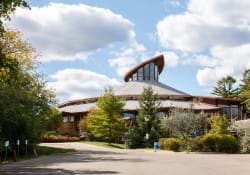 Thornhill, Ontario Bathurst St/Rutherford Rd "Toronto Waldorf School offers a curriculum that integrates academics, arts and movement while addressing the intellectual, physical, emotional and social aspects of child development from preschool to gr. 12." —From the school
|
 Mississauga, Ontario "Shining Stars School believes by combining the most conducive, inclusive and safe learning environment and developmentally appropriate curricular supports, our students can succeed!" —From the school
|
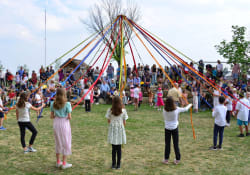 Calgary, Alberta "Calgary Waldorf School’s rich and engaging curriculum carefully balances academic, artistic and practical activities to stimulate intelligence and encourage creativity." —From the school
|
 Guelph, Ontario Victoria Rd N/Woodlawn Rd E "Trillium provides a vibrant and deeply nourishing comprehensive education designed to support both our students' capacity for free thinking and the strength of character needed to meet a radically changing world." —From the school
|
2 | Waldorf philosophy |
Waldorf education is based on the views of Rudolf Steiner (1861–1925), a prominent Austrian educator. It’s sometimes referred to as “Steiner education.”
So, what is Waldorf (or Steiner) education? This guide introduces the Waldorf philosophy, typical classroom practices, curricular approaches, and relevant research. It aims to help you decide whether a Waldorf school is right for your child.
Below are the core principles of the Waldorf approach. Not every school follows all of them, and implementations vary.
Waldorf students work with teachers to explore a broad range of areas and pursue their interests. They aren’t limited by a one-size-fits-all curriculum.
However, Waldorf schools do follow a curriculum and meet core standards. Jennifer Deathe, admissions manager at Waldorf Academy in Toronto, clarifies:
“There is a set curriculum starting as early as kindergarten. The curriculum outlines benchmarks and how children can meet them.”
Students progress at their own pace, with flexibility in how they meet these benchmarks. “Different children can demonstrate knowledge in different ways,” Deathe notes. This often sparks curiosity and fosters a love of learning.
Waldorf schools emphasize educating the whole child—“head, heart, and hands.” This means nurturing intellectual, practical, and artistic development while instilling core values.
Jack Petrash, long-time Waldorf educator, describes this in Understanding Waldorf Education (2002):
“Rather than focus solely on acquiring knowledge, creating a meaningful learning process becomes the focus. Through multi-sensory experiences, students develop capacities for thinking, feeling, and intentional purposeful activity.”
Sasha Singer-Wilson, a graduate of Waldorf Academy in Toronto, adds: “Your hands work, your mind works, your soul works, and your heart works—all in harmony.”
Core subjects like math, science, reading, and writing are typically introduced in grade 1 or 2—later than in most mainstream schools.
This delay allows children to first develop independence, focus, and social-emotional skills. Early academic instruction, some believe, can hinder deeper intellectual growth.
Lessons incorporate storytelling, visual arts, drama, movement, music, and crafts. Classes often begin with singing or poetry, weaving creativity into all subjects.
Waldorf shares this trait with many progressive and arts-based schools, using the arts to enliven learning.
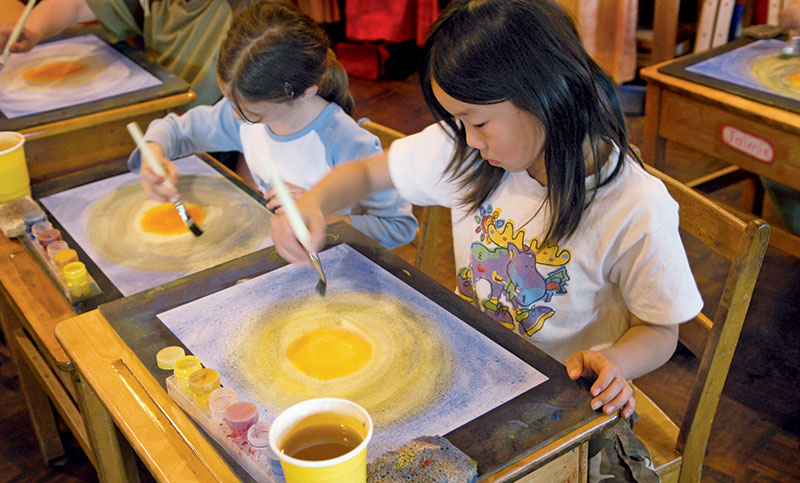
Preschool and kindergarten classrooms resemble home environments, filled with natural materials and open-ended toys. Activities include free play, art, circle time, and outdoor recess.
Imaginative play helps children build social and emotional skills. At the elementary level, students explore moral and historical figures through projects and storytelling.
At Waldorf Academy, students even perform teacher-selected plays, fostering moral imagination, empathy, and creative expression.
Up to grade 3, hands-on experiential learning is key. Students engage in daily tasks like cooking, cleaning, and gardening, often assigned through rotating schedules.
These tasks teach responsibility, life skills, and the value of contributing to a community.
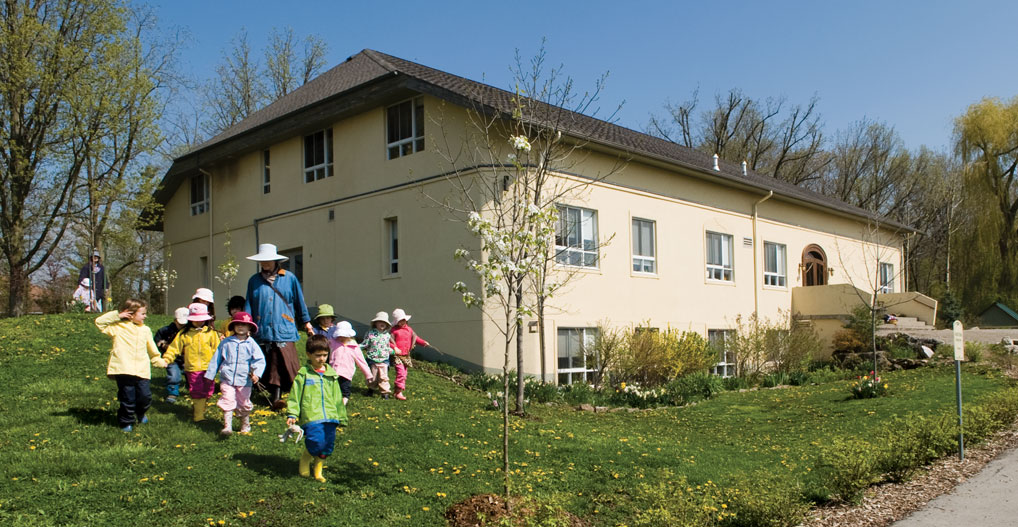
Waldorf schools emphasize connection with nature. Classrooms use natural materials, and activities like gardening and environmental education are central.
According to L.D. Davey (1998), “Young children learn about the world most readily by interacting with their environment.” Waldorf educators embrace this principle fully.
Religion and spirituality
In some Waldorf schools, students are educated about a wide range of religions. None of these are favoured, though. One of Steiner’s aims was to establish a spiritual, non-denominational, setting for students from all backgrounds.
This is partly based on his philosophical view, called anthroposophy. On anthroposophy, there is a spiritual world which is accessible by direct experience and through inner development.
3 | Waldorf classroom policies and practices |
The Waldorf school philosophy is unique. Moreover, it provides the basis for its classroom policies and practices.
Below, we outline some of its main classroom policies. Note, though, not all schools have all these policies. Policies tend to vary between different schools and levels of education, in Canada and elsewhere.
Each class remains together for many years, with the same teacher. This is often for between four and six years. Students thereby learn a lot about each other and grow together.
The original goal was for the teacher to stay with the same class for the eight years of what’s called lower school (grade 1 to 8). In recent years, though, schools have become more flexible about this.
Brian Searson led a Toronto Waldorf School class into Grade 7 that he had taught since Grade 2. “I see my role somewhat like a standing stone. You know how the Celts used to put up a stone... so they wouldn’t lose their way and it would indicate a direction to go? I feel a teacher really stands in front of the class as that marker.”
Grade 8 student Catherine Thompson-Walsh raves about being with the same classmates through the years. “It doesn’t matter where we go—I never get homesick because these 17 people are really my family. It just made it better to know I’m with people who I love, and they love me back.”
Core subjects, such as math, science, and English, are taught in main lesson blocks. These blocks are two to three hours per day, usually in the morning. Each block lasts from three to five weeks.
The blocks are integrated in that the topic of the block will be infused into other class lessons. This is part of Waldorf’s integrated curriculum and interdisciplinary teaching approach.
Also, over the school year, each subject is revisited. This approach has been compared to an ascending spiral: subjects are revisited several times, with each new exposure providing more depth and new insights.
Many subjects and skills not considered core parts of mainstream schools are featured centrally. These include art, music, gardening, mythology, and nutrition. Many students also learn to play recorder and to knit.
Students also study a variety of fine and practical arts. In elementary school, for instance, they paint, draw, sculpt, knit, weave, and crochet. Older students build on these experiences and learn new skills. These include pattern-making and sewing, wood and stone carving, metal work, bookbinding, and doll or puppet making.
The fine arts include form drawing, sketching, sculpting, and perspective drawing. Both boys and girls take part in all these activities. No stock is put in gender stereotypes.
There are rarely standardized textbooks in grades 1 through 5. Students, in effect, produce their own textbooks. These are called main lesson books. These are students’ own workbooks, which they fill in during the course of the year. They record their experiences and what they’ve learned in these books.
In some schools, older students may use standard textbooks to enhance their skills. For instance, this is sometimes done in math and grammar.
Learning tends to be not competitive. In some schools, grades aren’t given until at least grade 6. There are exceptions to this rule, though. Some schools give grades in elementary school (at least in the upper grades) to allow their students to make a smooth transition to mainstream middle schools (or high schools).
In many schools, though, instead of giving grades, teachers write detailed evaluations of each student at the end of the school year. Students are assessed mainly through their academic progress and personal growth. Teachers evaluate portfolios of work from lesson blocks. They also discuss this work in parent-teacher conferences.
Tests, exams, and quizzes are rare. These are usually only given in middle or high school. In high school, they’re only given as a requirement for going to university.
The use of technology, such as computers, tablets, and TVs, is restricted. Students first need to master “fundamental, time-honoured ways of discovering information and learning, such as practical experiments and books” (The Herald Scotland, December 2, 2007).
Too much screen time, it’s claimed, can interfere with interaction and social development. And, it can lead to inactivity, which can stunt children’s physical growth and overall imagination.
The role of teachers
Teachers aim to be role models students seek to follow. They try to foster rapport with and between students, and to nurture their curiosity, imagination, and creativity. They also try to be supportive, and educate by using creative and loving authority.
At the elementary level, a core teacher teaches the main subjects. Usually starting in grade 1, specialized teachers teach many other subjects. These include music, crafts, movement, and two foreign languages (such as French and Spanish, or French and German). Such specialized and core subjects are a main focus through all the years of elementary school.
4 | Waldorf curriculum |
The Waldorf curriculum responds to the growing child. The subjects, as well as how they’re taught, evolves over the years. The student-teacher relationship also evolves over time.
While different schools have different curricula, there’s also some common points of reference. Most schools focus on certain core subjects and skills through the years, though children learn them in different ways. According to Waldorf Answers, some of the main areas schools cover through the years are as follows.
Preschool (ages 1-5)
To learn more, read our Waldorf preschool guide. You can also read our comparison guides: Waldorf vs. Montessori preschools and Waldorf vs. Reggio Emilia preschools. Finally, check out our guides to preschool in general, different preschool programs, preschool compared to daycare, preschool curriculum, and the pros and cons of preschool.
Elementary school (or lower school)
Grades 1-3
Grades 4-6
Middle school
Grades 7-8
Waldorf schools, as we’ve discussed, have plenty of specialist and non-mainstream subjects. Many of them are infused throughout the curriculum. We outline some of the main specialist subjects below.
Waldorf has a distinct approach to teaching many subjects. This is based on its educational philosophy. For instance, in the younger grades, almost all subjects are introduced through artistic media. The belief is that children learn better this way than through lectures and rote tasks.
Below, we describe the Waldorf approach to teaching some core subjects: the language arts, science, math, and music.
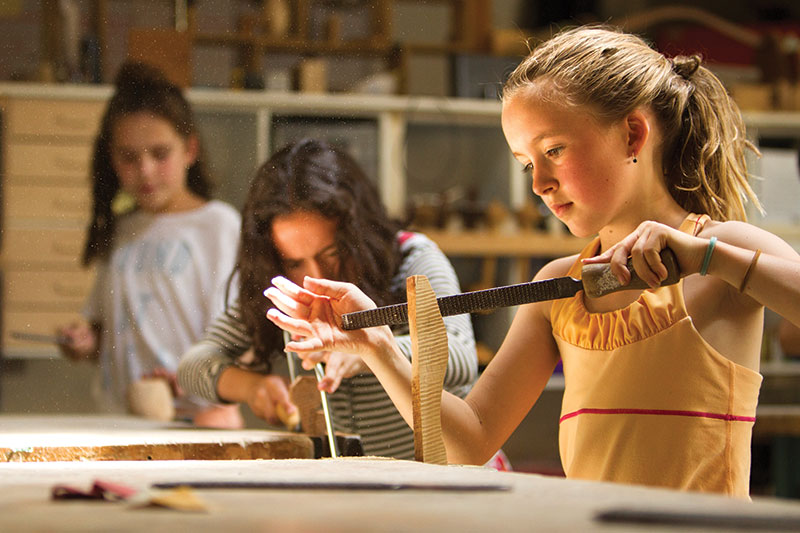
Language arts: There’s a big focus on the oral tradition. This often begins with fairy tales in kindergarten and grade 1. The oral approach is used throughout the elementary years, though. Mastery of speech is thought to be integral to all learning.
In addition to the spoken word, there’s also a lot of focus on the art of writing. In first grade, students explore how our alphabet came about, learning how each letter’s form evolved from a pictograph. Writing thus begins with pictures, imagery, and art. This is similar to the process approach to writing instruction, and unlike the systematic approach.
Writing is taught before reading. And, reading is taught later than in most mainstream schools. Reading, it’s thought, is more easily learned as an extension of speaking and writing. Children also pick it up more quickly when they’re interested and developmentally prepared.
Waldorf has a distinct approach to teaching many subjects. For instance, in the younger grades, almost all subjects are introduced through artistic media.
Science: There is an experiential approach to science education. Students are encouraged to observe, solve problems, and pursue their own interests. This is similar to the inquiry approach to science instruction, and unlike the expository approach. That said, there are important concepts students are expected to learn.
Students are also given plenty of opportunities to observe and interact with nature. This stirs their intellect and excites their imagination. It also allows them to understand the value of nature, something they’re an important part of.
Math: Math learning is very concrete and hands-on. This is similar to the discovery approach to math instruction, and unlike the traditional approach. That said, some schools use a mixed approach. For instance, at Waldorf Academy, students memorize and practice times tables and receive some direct instruction in math.
Math is rarely taught on its own. It’s often combined with other subjects, such as music. This approach engages many of the senses. It allows students to make important connections between their bodies, numbers, and math concepts.
Math is taught in the early grades, usually before reading and writing. A gradual approach is used, though. Children aren’t pushed to learn difficult concepts before they’re ready (which can stifle their love of learning).
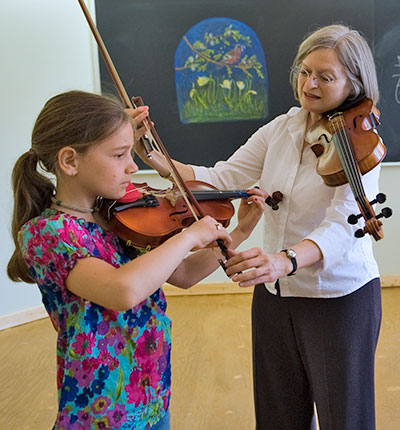
Music: Students begin with pentatonic flutes, lyres, and diatonic recorders. They then move on to string instruments. Other instruments, such as woodwind, brass, or percussion, may be added later. Vocal music starts with poetry and simple songs taught by the core teacher. It moves to formal choral music later.
A good teacher, though, will integrate music into many areas of the curriculum. For instance, as we’ve discussed, music is often used in the teaching of math. It’s also often used in the teaching of science, the language arts, history, art, and many other subjects.
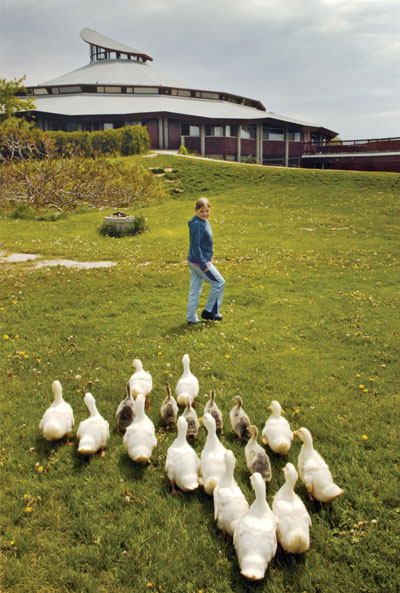
Eurythmy
Many, though not all, schools teach eurythmy. This is a dance-like art form in which music or speech are expressed in bodily movement. Specific movements correspond to particular notes or sounds. Eurythmy is also sometimes called “visible speech” or “visible song.”
While this art form puzzles some parents new to Waldorf, its simple rhythms and exercises can help students strengthen their body. It can also improve their gross motor skills and their ability to listen. And, since it requires students to coordinate with their peers, it can improve their social skills.
5 | Research on Waldorf education |
A number of studies have been done on Waldorf education. Although some of these have been small and limited, some offer useful results.
Consider two sets of such studies. One set tested logical reasoning and scientific understanding. The other set tested creative thinking abilities.
Logical reasoning and scientific understanding: In one study (2008), a group of Waldorf school students were compared to American school students on three different variables. Two tests measured verbal and non-verbal logical reasoning, and the third was an international TIMMS test (Trends in International Mathematics and Science Study). The TIMMS test covered the scientific understanding of magnetism.
Waldorf students scored higher than both the public school students and the national average on the TIMMS test. They scored the same as the public school students on logical reasoning tests. And, when the logical reasoning tests measured students’ understanding of part-to-whole relations, Waldorf students also outperformed public school students.
Several PISA (Program for International Student Assessment) studies (2005, 2009, 2012) suggested Waldorf students are better motivated to study science. These studies also suggested they achieve better understanding of scientific concepts compared to state school students in the United States.
Creative thinking: Some studies (1996, 2000, 2005) of Waldorf students’ artistic abilities found that they averaged higher scores on the TTCT (Torrance Test of Creative Thinking Ability). They also drew more accurate, detailed, and imaginative pictures. And, they were able to develop richer images than comparison groups.
While more research is needed, some tentative conclusions can be drawn from these studies. These conclusions relate to the impact of Waldorf education on academic aptitude, creativity, and social skills.
6 | The Waldorf appeal |
Waldorf is a great option for many families. Since 1919, over 1,000 Waldorf schools have opened worldwide. And scores of children have benefited from them.
Waldorf schools are unlike any other private or independent school. Many Waldorf schools are accredited by the Association of Waldorf Schools of North America.
Waldorf teachers instill a sense of enthusiasm for learning, allowing students to initiate and achieve greater success. Most of these teachers have been thoroughly trained in Waldorf education by a certified institute, such as the Waldorf Early Childhood Association of North America.
To enhance learning, teachers use effective techniques. The aim is to develop balanced, creative persons who have a life-long love of learning. For example, elementary students at Waldorf schools, aged 7 to approximately 14, learn through artistic media such as drawing. Once they reach middle school, the focus shifts to more direct intellectual stimulation.
Brenda Kotras, registrar at the Toronto Waldorf School, says academics are a crucial part of Waldorf education. But timing is everything.
“While the academics don’t start early, when they do start, the child is fertile and ready. So, while there isn’t such an emphasis on reading the first few years, for instance, the teacher is telling stories and showing a tremendous love for literature, for reading.”
Many graduates of Waldorf schools have gone on to great things. They have become world leaders in the arts, culture, media, business, and other sectors. These graduates include:
Tuition and funding
Private Waldorf schools tend to be reasonably priced. They’re typically on the lower side of private school tuition in general. Of course, the cost of a school will vary based on size, location, the level of schooling, and other factors. Typically, though, it ranges from $5,000 to $25,000 per year.
Moreover, some schools offer financial support to defray costs. For instance, if you can demonstrate need, they might offer you a bursary to help finance your child’s education. Or if your child excels in some area, such as academics or athletics, they might be awarded a scholarship to help cover tuition. Typically, more bursaries are offered than scholarships.
7 | A Waldorf Q & A |
Waldorf schools use a holistic approach to education. They immerse students in practical, hands-on, and multi-dimensional learning tasks. These tasks engage their bodies, brains, and emotions.
Ryan Lindsay, board president of the Waldorf School Association of Ontario (now defunct), discussed the Waldorf approach with us.
Q: What are the unique features of a Waldorf school?
A: We work in more subtle ways than other schools, with more hands-on activity. A lot of time is spent away from desks, with children using their hands and bodies in learning activities. We see children as multi-faceted, and the more engaged the body is in hands-on activity, the more engaged the brain is. It also helps build their self-confidence, because rather than just learning off a blackboard or writing tests, they are constantly accomplishing tasks, which is more tangible and rewarding. We also have integrated academics, so that students use what they learn from a variety of different subject areas to complete practical projects.
Q: What are the unique benefits of a Waldorf school?
A: At Waldorf Schools, 95 percent of our graduates go to university, and 50 percent get a master’s degree or PhD. So the first thing I tell parents is that it works. Also, the number one factor in the successful education of a child is parental involvement, and our schools heavily emphasize a strong involvement by a child’s family, which makes all the difference.
Q: Is Waldorf school a good fit for my child?
A: Parents need to see for themselves what Waldorf is all about and how it promotes the development and self-esteem of children. Children are fully immersed in learning in a holistic way, and we don’t have to give them a gold star or tell them they’ve done a good job when they achieve something, because they experience that satisfaction directly through learning that is fun, engaging, and practical.
8 | Compare Waldorf schools |
| Tuition (day school) | Students receiving financial aid | Grade eligibility for financial aid | Avg. aid package size (annual) | |
|---|---|---|---|---|
Waldorf Academy | $385 to $24,950 | 20% | JK - 8 | $8,000 |
Halton Waldorf School | $19,950 | K - 12 | ||
Toronto Waldorf School | $5,742 to $25,450 | 12% | JK - 12 | $4,000 |
Calgary Waldorf School | $10,600 to $12,130 | Preschool - 9 | ||
Trillium Waldorf School | $15,875 | 23% | K - 8 | $9,535 |
9 | Important resources |
To discuss Waldorf education, visit the Our Kids parent discussion forum.
To learn more about Waldorf education, check out the following websites and articles:


|

|

|

|

|

|

|

|
 |
 |
 |
 |
 |
By logging in or creating an account, you agree to Our Kids' Terms and Conditions. Information presented on this page may be paid advertising provided by the advertisers [schools/camps/programs] and is not warranted or guaranteed by OurKids.net or its associated websites. By using this website, creating or logging into an Our Kids account, you agree to Our Kids' Terms and Conditions. Please also see our Privacy Policy. Our Kids ™ © 2023 All rights reserved.